)
Adelaide’s Space Machines Company has partnered with the University of Technology Sydney (UTS) to create Australia’s largest industrial-scale spacecraft manufacturing facility in a major milestone for the domestic space industry.
The Optimus Factory (OF-01), to be located at the UTS Tech Lab in Sydney, is aimed at establishing critical sovereign capability for the design, assembly and testing of 300kg-class spacecraft at scale.
Under the agreement, which extends an existing partnership between Space Machines Company and UTS by another three years, the expanded facility will incorporate an extra 800sqm spacecraft production space and house Australia’s largest satellite assembly, integration and test cleanroom.
Space Machines Company, which specialises in on-orbit servicing, says the facility will have the capacity to produce five of its new Optimus Viper spacecraft simultaneously, scaling to more than 20 units per year.
“OF-01 marks a historic transformation in Australia’s sovereign capabilities, shifting our nation from a consumer to a producer of critical space infrastructure to close Australia’s space production gap at a pivotal moment in Indo-Pacific security,” says Rajat Kulshrestha, CEO of Space Machines Company.
“Space Machines Company is one of the few companies globally developing capabilities that ensure freedom of movement in space and the only one headquartered in the Indo-Pacific region.
“This strategic capability positions Australia to make significant contributions to allied space security efforts, particularly with the United States, as countries look for technologies that can quickly safeguard critical space infrastructure.”
Space Machines says that OF-01 will support Australia’s future defence requirements, bolstering national security and commercial applications.
The company plans to initially use the facility to produce its Viper rapid-response spacecraft variant, which is currently under development as an evolution of its first vehicle, Optimus.
OF-01 is scheduled to be operational by late 2025, with production of multiple Viper spacecraft expected to begin in early 2026, making it the largest satellite assembly facility in Australia.
“The OF-01 facility represents an exciting leap forward for Australia’s space industry,” says Enrico Palermo, head of the Australian Space Agency.
“This collaboration between Space Machines Company and UTS Tech Lab showcases Australia’s commitment to being an active, capable partner in the international space community.
“It will help drive the Australian Government’s agenda to grow our nation’s industrial capability, boost productivity, build economic resilience and create a fairer society.”
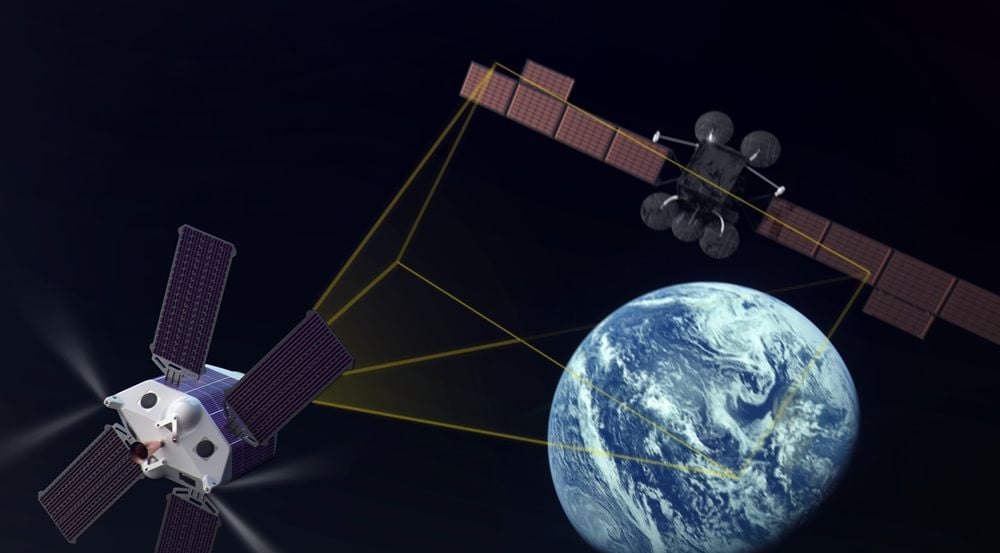
Space Machines Company (SMC) received an $8.5 million grant from the federal government in 2024 under the Australian Space Agency’s ISI India Projects program for a collaborative demonstration mission, Space Maitri, between India and Australia using the Optimus Viper platform.
“This partnership is focused on joint research and development, enabling UTS and SMC to shape the future of the space industry in Australia and globally,” says Professor Michael Blumenstein, Pro Vice Chancellor of Business Creation and Major Facilities at UTS.
“It also provides UTS students and researchers with access to leading-edge technology and real-world experience, placing them at the forefront of space innovation.”
Blumenstein says that until now Australia has been largely dependent on overseas suppliers for space assets and technology, “limiting our strategic autonomy and industrial growth”.
“By establishing local manufacturing capabilities, we’re creating high-skilled jobs and retaining intellectual property within our borders, ensuring Australia can independently develop, produce, and deploy the space infrastructure essential for our future security and prosperity,” he says.
)