)
Drawing on the adage that you can't improve what you can't measure, Melbourne-based startup Phantm has attracted an enviable clientele of major retail brands to its technology that quantifies the environmental impact of packaging.
Adapting to a changing Zeitgeist where some global political currents are drifting away from sustainability objectives, Phantm has wrapped up its proposition in cost savings that may prove just as compelling as its benefits for reducing the load on landfills.
Prospective customers are also planning ahead for extended producer responsibility (EPR) rules, which Phantm's CEO Elliot Costello describes as a "cradle to grave" approach to materials whereby "whatever you place on market, you're ultimately responsible for". Such policies are in deployment across 24 of the EU's 27 member states, and he believes Australia will follow suit within a few years.
Following a $2 million seed round in late 2023, Phantm has just secured an $800,000 bridging round to maintain its sales muscle ahead of a Series A planned for 2026. In this latest instalment of a series on the circular economy at Business News Australia, we explore how this company is harnessing data to make an impact on supply chains and materials waste.
In a world where almost everything has key performance indicators (KPIs), the environmental footprint of packaging has been strangely left behind.
This is despite the fact that consumers are increasingly demanding that retailers and suppliers take steps to reduce the amount of packaging and improve its recyclability - an issue that Costello notes Australia is falling behind in, and which is a critical step towards developing any semblance of a circular economy.
"We’re not meeting our packaging objectives as a nation. We’re falling well short," he says.
"We walked back on our 2025 objectives as a nation – they were bounced out to 2030 objectives and it's very unlikely we'll meet them.
"As it stands today we're sitting at 19 per cent of our plastics that are recycled in Australia. If you reverse that ratio, 81 per cent of the plastics we put in our recycling bin this week will go to landfill."
Phantm's head of brand, Matt Kendall, says the only true circular economy at the moment is nature itself, where everything gets used again. He believes the challenge of recyclability is currently complicated by the prevalence of packaging that contains multiple materials.
"If the substrate has multiple materials, that reduces that ability for packaging to be recycled, so a lot of the time the changes we're making [through Phantm's data-based recommendations] are increasing that recyclability rate," Kendall says.
"A lot of what Phantm is about is meeting businesses and society where they're at. We actually need to get a whole lot better at becoming a recycling economy before we even sort of start to plan out what a circular economy looks like."
Costello says that most leaders want to do better on this issue, but many lack the necessary information to take effective action. That's where Phantm comes in with its packaging optimisation platform, which sources and analyses high-definition data for customers.
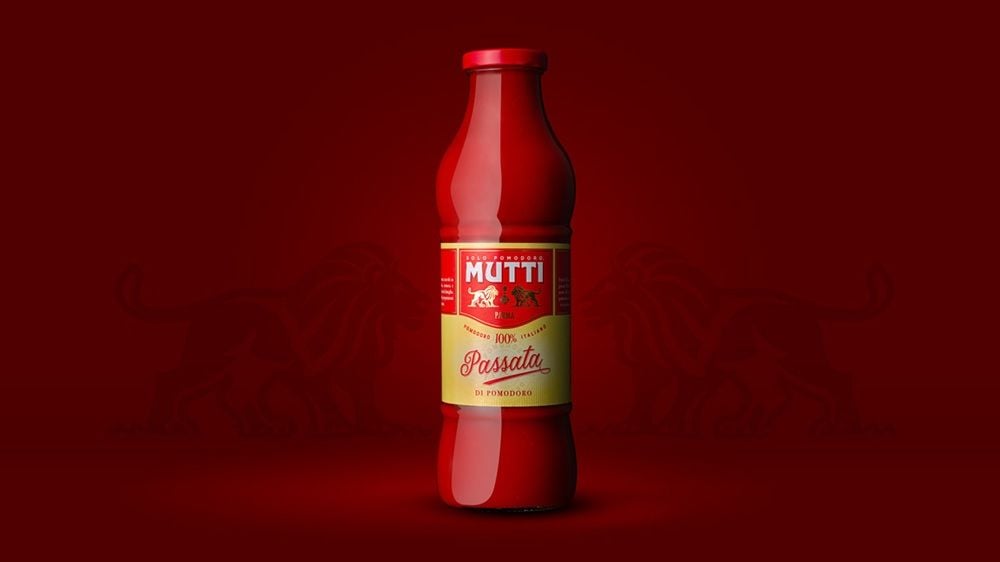
For example, this has led to $350,000 in savings for Mutti Parma Australia on just one single stock keeping unit (SKU), its passata bottle, while even larger savings were identified for department store group David Jones by optimising its corrugated cardboard packaging.
"The core problem we found was there was zero to very little packaging data," Costello explains.
"Most brands might have fantastic data on their product such as what's inside the box or container, whether it's a food ingredient or a cologne, but very few have the data that actually traces what the materials are, so what the different componentry is or the multi layered materials are, and where it's from."
He says there exists an unhealthy dependency on international suppliers for an import nation like Australia, and this has meant that amongst industry "most brands have no idea what the materials are".
"We've just worked backwards from there. If the data doesn’t exist in spreadsheets or pdfs, we’ve worked backwards with what data they have, and being able to meet brands where they're at by extracting pieces of information and effectively using both technology and our packaging experts to figure out ways that we can develop their packaging data asset," the CEO says.
"And it’s really giving brands, for the first time, access to information that the suppliers haven't provided them to make better decisions.
"We might not be a best friend of all packaging suppliers, because that takes away some of their margin, but it's less materials placed on market, which ultimately means less stuff ending up in landfill."
Costello emphasises it's the combination of Phantm's technology and its team of packaging experts that deliver value to customers, which fills in a niche at a time when sustainability leaders are "stretched".
"This is one part of so many parts of their job, so what Phantm does is it walks in and makes it really easy for senior leaders to access this information and then make more informed decisions to save money and meet their environmental objectives."
Costello says Phantm now works with the likes of Asahi, Amazon, David Jones, Unilever and Mecca, although the company does not exclusively cater to large brands.
"If you ask any startup founder, the chance of working with one of those brands would be a dream, but we attract major industry who have significant products and packaging in their supply chain," he says.
"All those brands I mentioned have a significant materials footprint and want to do better, but importantly also look at ways to cut cost."
He says European-headquartered partners in particular, like Mutti and Danone, are planning to get ahead of EPR policies in Australia, and so are looking to work with the country's best technologies and leaders to understand our full scope of materials and avoid burdensome fees when new regulations arrive.
He says that if Phantm "gets it right" with any of the global companies it works with, there could be global opportunities within these networks.
"We're now talking to Mutti and their head office in Italy, and that's a really exciting opportunity. There are opportunities for Unilever, and we've presented to Uber Eats. If we crack one of those nuts, as an Australian technology that's pretty significant.
"You don’t take venture funding if you're sitting on your heels and servicing Melbourne and Sydney-based customers. They’re not expecting every venture to be able to expand globally, but it’s the intention for us all to become unicorns.
"Our expansion will probably be across Asia. We're quite pragmatic and reasonable with that expectation."
These relationships weren't built overnight, and Costello is grateful to the early adopters Thankyou Group and Mecca.
"Thankyou Group were really smart with how they wanted to make decisions about materials in their supply chain, and used our service, both technology for LCA (life cycle assessment) data but also our team of experts, to make the best decisions for all forms of their product and packaging, and I credit that team for doing so," Costello says.
"Mecca is a very smart business – it knows its customers really well and it knows the sustainability trends that are coming and the problems that the cosmetic industry has with so many laminates and complex materials that go in every single one of their products," he adds.
"They've relied on us a number of times to come back and really check their assumptions, check their thinking to objectively help push them in the right direction."
Phantm has also been working behind the scenes with one of Australia's largest berry producers Mountain Blue, owned and run by the Bell family which is close to Costello's own. Last month the Northern Rivers, NSW-based group announced a new marketing partnership under The Berry Collective with leading Coffs Coast-based berry growers Oz Group Co-Operative.
"We've been working with Josh McGuinness who is now the incoming CEO of The Berry Collective to make sure he's thinking about the best form of packaging that is being placed on market is compliant and able to save them money.
"It goes back to using our service as independent and a way for Josh as an incoming leader, to make good, informed decisions because it has ramifications across the supply chain, from Coles and Woolies right down to every individual supplier of berries into The Berry Collective."
Costello became involved with Phantm as a "half accident" after 10 years working in the humanitarian industry, having been an accountant at PwC before that.
"A friend and supporter of the not-for-profit I worked for was starting Phantm as the principal investor, wanting to really push industry to do better, and provided me an invitation to join the team," he recalls.
"There is no humanitarian justice without environmental justice. So I see that connection between my work and the not-for-profit sector quite tangibly linked to my work now with Phantm."
The motivation to "do good" is not enough though, and Costello concedes there have been some "existential moments" as a startup trying to put climate technology into action.
"Certainly last year the Zeitgeist wasn’t with us. A lot of the momentum we had in 2020 with Biden coming in with Inflation Reduction Acts that had great climate-positive ramifications has now started to have the handbrake put on it," he says
"Trump walked away from the Paris accord, there were questions in the Australian Federal election around whether we need climate manager reporting, and there were some questions across the EU around the importance of protecting industry and stopping the pace of climate reporting.
"That has ramifications from major industry right down to small players like us."
Against this backdrop, he says Phantm has had to be "agile, flexible and nimble enough" to stay alive, emphasising the importance of listening to what customers need.
"Industry is telling us they want better ways to manage compliance They want ways to find cost reduction, and they want ways to do better forms of supply chain management," he says.
"It's hard as an Australian technology. It's not a huge industry, and in terms of climate technologies a lot of them do come from certainly the US and Europe, so we're really proud that we've got a number of brands on our sort of customer list, but the next phase for us is real growth."
Kendall echoes this sentiment of climate tech companies needing to adapt their playbooks as perceptions change around the Environmental, Social and Governance (ESG) space, but he is also hopeful.
"The tide’s gone out, and I would say the tide’s gone out because it will surely come back in again," he says.
"But there has been that vibe shift, and I think one of the things we identified really early on in the piece is that sustainability has to stand on its own two feet in a business sense.
"You just can’t do it on 'good vibes and morality please' – even social licence is shifting a bit. Whereas sustainability used to be bolted onto business, we're really trying to weave sustainability thinking and sustainability data into that decision-making process."
To extend the company's financial runway until its Series A, existing investors Black Nova Venture Capital, Salus Ventures took part in the latest bridging round with Exhort Ventures also joining the register.
)