)
A $150 million funding boost gives the rapidly-expanding Adelaide-based scale-up the means to further its technologies that help detect critical minerals under the earth's surface, and which in 2026 will be deployed on the Moon to improve understanding of the lunar subsurface.
Adelaide-headquartered Fleet Space Technologies has seen its valuation more than double in the space of 19 months to $800 million, following a recent $150 million Series D funding round led by the growth investment arm of the Ontario Teachers’ Pension Plan in Canada.
Blackbird Ventures, which led the company's $50 million Series C last year, also participated in the latest raise alongside existing investors Hostplus, Horizons Ventures, Artesian Venture Partners, and Alumni Ventures.
The new investment will be used to expand the capabilities of Fleet Space’s global end-to-end exploration platform, ExoSphere, to accelerate the discovery of critical minerals.
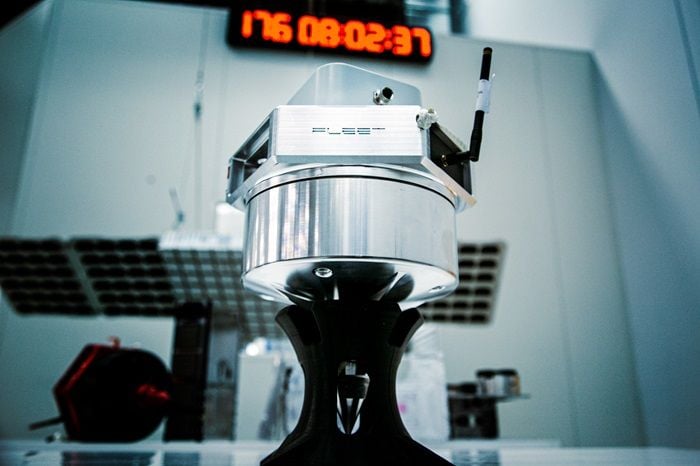
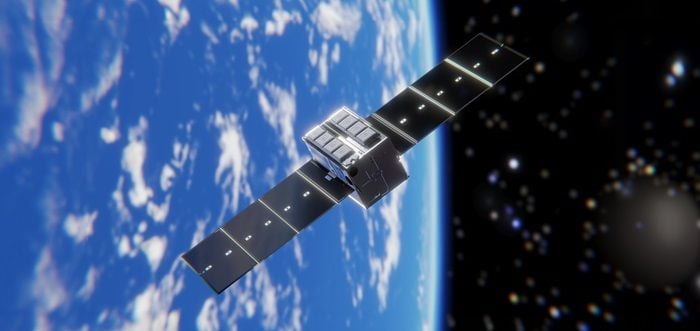
By integrating Fleet Space’s satellites in low earth orbit (LEO), smart seismic sensors, and artificial intelligence (AI) into an end-to-end solution, ExoSphere streamlines the acquisition, processing, and integration of exploration datasets, providing the global mining industry with high-quality targeting insights faster than ever before while minimising environmental impact.
ExoSphere is currently used by more than 40 leading mining exploration companies across five continents, including the likes of Rio Tinto (ASX: RIO) and Barrick Gold (TSX: ABX).
In the past year the company has expanded its global footprint to the US, Canada, Chile, and Luxembourg, with more than 130 employees worldwide supporting the vision of its founders - former propulsion engineer at the European Space Agency, Flavia Tata Nardini, and aerospace entrepreneur, Matt Pearson.
The co-founders set up Fleet Space to harness the capabilities of space exploration technologies for a new wave of solutions that can accelerate decarbonisation and the global energy transition.
"There are two versions of the future. One where we bend the latest advances in space, AI, and big data towards building a clean energy future and another where we risk net-zero targets falling out of reach as the rate of new discoveries of energy transition minerals continues to decline," says Tata Nardini, the company's CEO.
"With ExoSphere, we have combined these technologies into an end-to-end platform that seamlessly integrates with and complements modern mining operations - making the frontier of exploration technology accessible to the global mining industry within a single workflow.
"This is a fundamental step to unlock humanity’s potential for making extraordinary discoveries with less environmental impact."
The funding boost also comes after a year when the company delivered the world’s largest real-time 3D imaging survey in Australia’s Macquarie Arc and the world’s highest real-time 3D imaging survey in Chile’s Atacama region
The group also launched ExoSphere Discovery, an AI-powered exploration technology that uses proprietary multimodal AI models to predict opportunity zones and targets with potential mineralisation.
"This funding is not just a testament to Fleet Space’s growth, strong investor confidence, and sustained innovation in core technologies needed to address dual challenges of climate change and mineral exploration," says Federico Tata Nardini, Fleet Space's chief financial officer and chief investment officer.
"We are proud to be among the few companies globally to close a Series D round in the context of reduced activity in the venture ecosystem and look forward to furthering our vision, strategic initiatives, and roadmap to scale the business to the next level."
Blackbird partner Niki Scevak says his venture capital firm is proud to continue its investment in Fleet Space, "building on many years of history".
"Quite simply, the discovery of critical minerals must exponentially increase if we are to electrify our society by 2050 and breakthroughs, like ExoSphere, are needed to make it happen."
Rick Prostko, senior managing director at Teachers’ Venture Growth, which led the round, says the ability to meet the rapidly increasing demand for critical minerals presents a significant challenge to achieving global net-zero targets.
"Current mineral exploration methods are inadequate for efficient discovery and production," Prostko says.
"Fleet Space addresses this with advanced 3D subsurface imaging and AI analysis tools, which have the potential to sustainably transform the industry. We are proud to support the multidisciplinary team at Fleet Space in their efforts to accelerate the global energy transition."
Fleet Space's plans are not just limited to improving knowledge of the earth however, having laid the foundation to rapidly accelerate the exploration of new worlds.
The smart seismic sensors used as part of Fleet Space’s terrestrial ExoSphere system represent the technological precursor for its lunar variant – SPIDER – which will be deployed on the Moon in 2026 to enhance humanity’s understanding of the lunar subsurface.
Collaborating with MIT Media Lab’s Space Exploration Initiative, Fleet Space is also helping to advance off-world research needed for the planning of future missions to the Moon, Mars, and beyond.
Additionally, Fleet Space has unveiled a cost-effective, resilient full duplex SATCOM system using microsatellites and reprogrammed Centauri-4 to become the world’s smallest voice-enabled satellite.
"The convergence of innovation in space, AI, and 3D subsurface imaging represents a foundational pillar of the core technology set that will enable humanity to build permanent research stations on the Moon, Mars, and beyond," says Matt Pearson, founder and chief exploration officer.
"The flywheel we’ve created by continuously enhancing the subsurface understanding of Earth through the global deployment of ExoSphere simultaneously drives advances in the technology needed to build highly scalable, data-driven exploration systems for new worlds.
"A bold new chapter in the history of space exploration is about to begin and we are positioned to play a significant role as humanity boldly ventures deeper into our solar system."
)