)
Multiple ASX-listed biotech and medtech companies continue to see depressed share prices despite clarifications their products will be exempt from the USA's so-called reciprocal tariffs, as uncertainty around further trade barriers weighs heavily on investor sentiment.
Shares in Australian pharmaceutical giant CSL (ASX: CSL) are down 4.3 per cent since US President Donald Trump's 'Liberation Day' announcement, despite a near-immediate response to the securities exchange emphasising that pharmaceutical products are not subject to the reciprocal tariffs.
Another Melbourne-based biotech Mesoblast (ASX: MSO) also asserted its tariff exemptions in the immediate aftermath of tariff announcements last week. Its shares may be up 6.5 per cent today but are still down 10.18 per cent over the past five trading days.
"Mesoblast believes that its allogeneic cellular products, including Ryoncil and Revascor, will not be subject to the tariffs," the group stated last week.
"Mesoblast develops allogeneic products based on its proprietary remestemcel-L and rexlemestrocel-L mesenchymal lineage stromal and precursor cell platform technologies.
"Its allogeneic cellular products derived from these platforms are manufactured from US donors in the US and designated as US origin products."
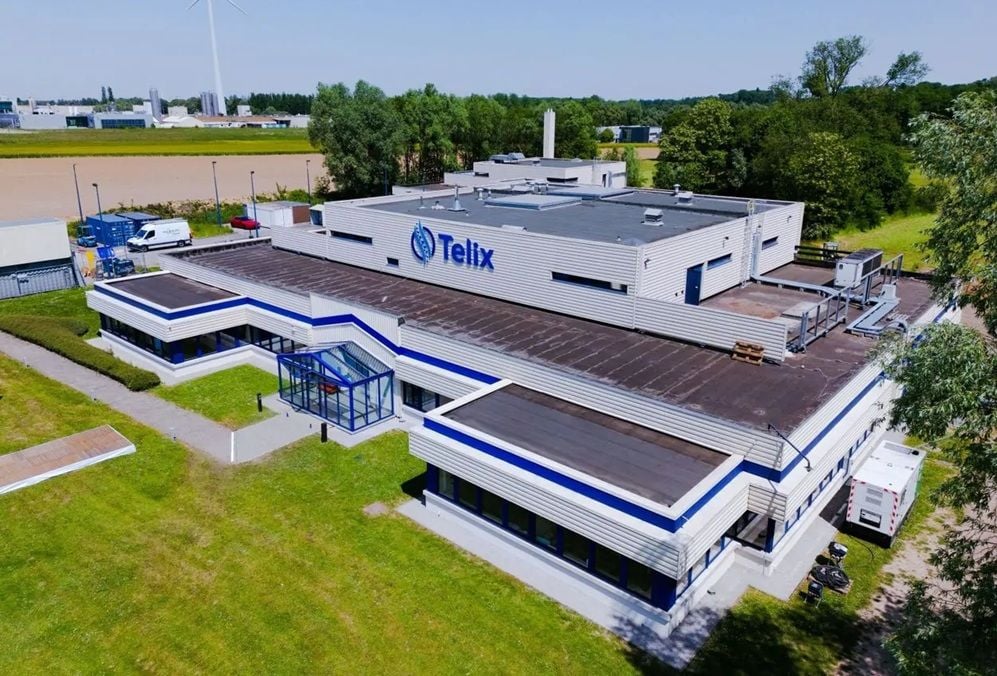
Also based in Melbourne, radiopharmaceutical group Telix Pharmaceuticals (ASX: TLX), advised the market yesterday that it did not expect any material impact on its business or supply chain as a result of the international trade tariffs levied by the US.
Telix shares have seen a 6.83 per cent bump so far today to $24.73, but this level is still down 5 per cent over the past five trading days, and down almost 11 per cent over the past month.
"Telix has an extensive US-based manufacturing and distribution infrastructure, including third-party manufacturing sites and radiopharmacy partner networks, for the production and delivery of its FDA-approved products Illuccix and Gozellix," the company wrote in a statement.
"The majority of Telix’s workforce is based in the US. The company also notes that pharmaceutical products are currently exempt from the reciprocal tariffs.
"Due to the ‘just-in-time’ nature of radiopharmaceutical products, such products are generally manufactured or radiolabelled in close proximity to the point-of-care. This will continue to be the case for new products that the company expects to launch in 2025."
Telix also clarified it did not rely on rare earth elements of the same kind utilised in semiconductor supply chains to create its products, and was therefore "not impacted by the export controls imposed by the Chinese government".
The group also acknowledges reports of significant change at the US Food and Drug Administration (FDA), but said the agency continued to process applications and information requests.
"Telix has not been notified of any changes to the timelines for its New Drug Application for Pixclara (TLX101-CDx) or Biologics License Application for Zircaix (TLX250-CDx)," the company stated.
Like Telix, shares in one of Australia's best-known medical technology companies, Sydney-based hearing implants multinational Cochlear (ASX: COH), are down 5 per cent over the past five trading days. Its statement to the market this morning has had little effect on shares which have stayed flat.
"Cochlear confirms that it will continue to be able to rely on a chapter of the Harmonized Tariff Schedule of the United States that provides for duty-free importation on a range of products into the US, including hearing implants," the company stated this morning.
"Cochlear will continue to actively monitor and engage in the evolving global landscape so that it can continue to provide implantable hearing solutions to as many people as possible, and service existing recipients over the course of their life."
With regards to small-cap companies, the market has taken little notice of mineral-only UV sunscreen filter manufacturer Advance ZincTek's (ASX: ANO) reporting yesterday that its products would be exempt.
"We have received advice that it appears that pharmaceuticals were excluded from the 10 per cent Australian tariffs, and in particular zinc oxide was specifically listed as exempt in Apendix II to the Trump Administration Executive orders," the company stated.
"At this stage we do not see any negative impact to [sic] ANO business in [sic] USA."
Point-of-care specialised medical imaging (CT) equipment developer and manufacturer, Curvebeam AI (ASX: CVB) has witnessed a 5.68 per cent rebound in its share price today after highlighting strong inventories in the USA. However, Its shares remain down 19 per cent over the past five trading days.
"As previously disclosed, CurveBeam AI conducts its manufacturing activities within the United States with the majority of components derived from US partners representing circa 75 per cent of cost of goods," the company stated this morning.
"For components used within CurveBeam AI devices that are sourced from countries outside of the US, discussion with suppliers indicate that any impact will not be material.
"CurveBeam AI maintains a high level of device and component inventory to shield its supply chain from near-term external shocks.
"Based on an initial risk assessment the company does not expect material adverse effects from the tariff changes, and the company’s board and management will continue to monitor the dynamics of these tariffs moving forward."
)