)
One of the world's most valuable apparel brands lululemon has signed a 10-year offtake agreement to source recycled raw materials from Australian deep tech company Samsara Eco, which can break down plastic waste with synthetic enzymes to create fabrics commonly used in the fashion industry.
The deal could see Samsara Eco support 20 per cent of lululemon’s total fibres portfolio, sourced from Samsara’s commercial facilities starting in 2028.
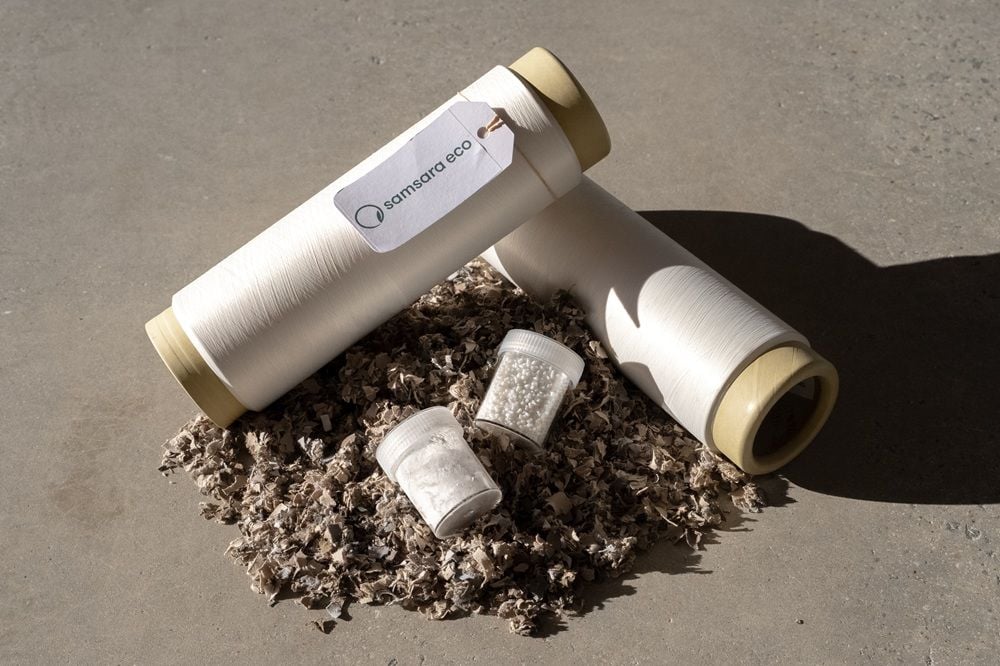
The breakthrough builds on a partnership that began in 2023 and last year brought to market the world’s first enzymatically recycled nylon 6,6 product sample, a tough and premium fibre that is difficult to recycle otherwise, as well as a proof-of-concept of polyester anorak jackets with the Canadian brand.
Samsara Eco says these garments demonstrate the capabilities for enzymatically recycled textiles to deliver the same look, feel, and high-performance qualities guests expect and love from lululemon.
Related story: Enzyme engineering helps infinite recycler Samsara Eco break down plastic waste to ‘building blocks’
"Scaling circular materials requires bold partnerships and a shared commitment to rethinking how our industry operates. Our partnership with Samsara Eco is a powerful example of what’s possible when innovation meets collaboration," says lululemon chief supply chain officer Ted Dagnese.
"As we work toward our 2030 impact goals, we’re taking a diversified approach - investing in multiple partnerships to advance solutions and help reduce our reliance on fossil-fuel derived resources.
"Together with our partners, including Samsara Eco, we’re helping to turn our vision of a circular model into a reality."
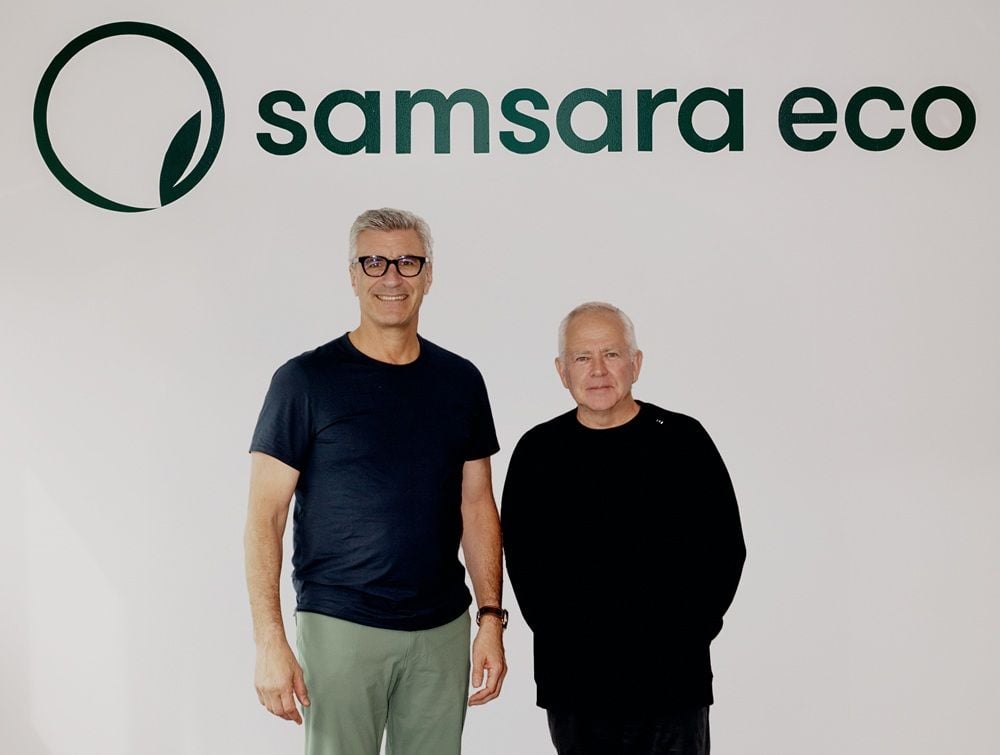
In parallel Samsara Eco is working with global polymeriser and nylon producer NILIT, and will soon open a new plant in Jerrabomberra, NSW, outside Canberra where it will support commercialisation efforts as a "space for brands to test and learn".
Samsara Eco also plans to open an international commercial facility in 2028.
Polyester and nylon are two widely used fibres in textiles, accounting for approximately 60 per cent of the world’s total fibres production. To strengthen the recycling capabilities of these textiles, Samsara Eco became the first company to enzymatically recycle nylon 6,6 products in this way.

Samsara Eco also recycles polyester, including mixed plastics and fibres, with its engineered enzymes, which break down plastic into its original building blocks so they can be seamlessly reintegrated into existing manufacturing processes to create new products.
"Our expanded partnership with lululemon represents a strong step forward to help create a fully circular ecosystem and further highlights the industry’s commitment to transition to more circular materials," says Samsara Eco chief executive officer and founder Paul Riley.
"The technology to make circular materials is not a pipe dream – it is here, ready for adoption by forward-thinking companies.
"I’m incredibly optimistic about how we will help fuel circular apparel over the next decade with lululemon."
)