)
“We’ve had to really iterate our hardware at the speed of software," says Monty Compost founder and CEO Ashley Baxter.
After a year spent creating and validating its industrial product for automating temperature tracking at compost sites, Brisbane-based tech startup Monty has witnessed a rapid uptake following its recent launch into the US market.
Founder and CEO Ashley Baxter tells Business News Australia it only took two months of "solid outreach" for Monty to get its first US customer over the line, and now the number is at five and growing. This compares to around 10 sites in Australia of which two are now live.
"Over the past 12 months our focus really was creating the industrial product, validating and selling the industrial product here in Australia, and now validating and selling it in the US," she explains.
"Even though the focus on Monty Pro has only been in the past 12 months, it’s off the back of five years before that of building the technology, understanding the industry and having all the fundamentals in place. That has seen us get these milestones relatively quickly."
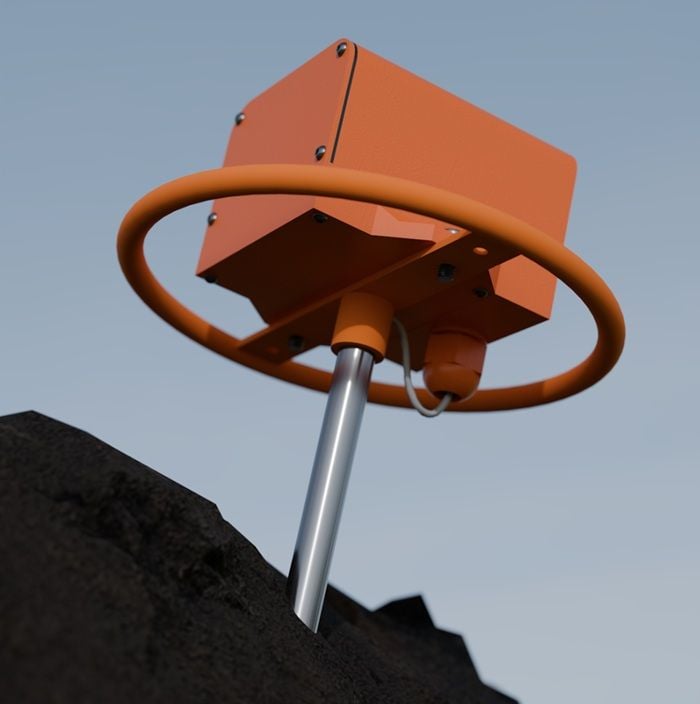
From what began as a business-to-consumer (B2C) focus for households to optimise their management of backyard compost, Monty started its pivot to industrial use cases ahead of a $1 million raise last year that brought Skalata, Antler and the Queensland Investment Corporation (QIC) to the cap table, alongside early backer UniQuest and angel investors.
Baxter says the Monty Pro offering has undergone three hardware iterations since then based on feedback and in-field work with partners.
"We’ve had to really iterate our hardware at the speed of software," she says.
The second of these iterations led to a 50-probe production run at the start of 2025, but now the startup is kicking it up a notch with a 1,000-probe production run that Baxter expects to send to customers by September or October.
"In B2C when you’re selling 1,000 probes, you need 1,000 customers and you need the support systems, the outreach, the CRM (customer relationship management) for all of that," Baxter says.
"We built all of that for our consumer product, but then when you're doing B2B that’s like 10 customers.
"We’ve been able to adapt a lot of our business from that high-touch consumer product line into the B2B side, which has meant we've been really able to kind of keep things as lean as possible, even with something as deep tech as hardware."
The initial expectation was that most of the 1,000 probes in production currently would be destined for Australian customers, but the positive response from across the Pacific has now meant it will more likely shift towards a 60:40 in favour of American buyers.
"The US obviously is like 12 times larger than Australia – there are multiple sites in the US that have the same number of compost sites as all of Australia," the entrepreneur says.
"What we have seen with the US customers we’ve been talking to is in that the questions they ask and the way they approach the sales conversations, Americans are much more entrepreneurial and open to innovation than Australians.
"I think that for when you have a really innovative new product, once you've got the functionality proven and you've got a value that you can add to a customer, you really want to just go to where the customers who are going to adopt it the fastest are."
When asked about the impact of a 10 per cent tariff on Australian goods exported to the US, Baxter says it's "not nothing" but the business model can handle that for now as it works on long-term subscription contracts.
However, once Monty hits a critical mass in the market she plans to set up manufacturing onshore in the US.'
"We’ve set up an in-house test assembly and final stage manufacturing build in our office in Brisbane that we do right now. The benefit of that is you can have a lot more durability in your supply chain," the founder says.
"All the complicated, difficult stages of the manufacturing are controlled by us in-house, which means that we can do them on-demand as we get customers, so we’re not having to get the final-stage assembly product before we have them sold.
"It means we can set up other assembly and build processes closer to where our final customers are."
Regarding the US market entry, Baxter says Monty is in a fortunate position that the product is "quite universally standard"
"There aren’t a whole lot of differences between a compost site in the US and a compost site in Australia," she says.
"There were some differences in the terms we use, like they've got Fahrenheit and we do Celsius, but the actual workflows and key places where our product adds value are effectively identical.
She says that as a hardware startup the company will eventually need to raise capital again, more with the purpose of improving margins by building a US facility.
"But in terms of our burn, we’re in a really comfortable place – we’ve got a point of breakeven on this new product that'll be as early as probably this year or early next year," she says.
"The great thing about that is because everything is so lean, once you get probes live they’re immediately generating revenue and giving payback for us."
She also highlights the fact that Monty's typical customers are in "very steady industries", and sees other positives in the US government's reshoring push that fits in well with the startup's plans.
Additionally, the manual work that Monty replaces is currently performed mostly by entry-level labourers that have become more scarce under the current administration.
"At its core, our value proposition is an automation play, and the jobs that we’re automating are some of the ones that are actually being quite affected by a lot of the new immigration policies," she says.
"That's not really our place to say, but at the end of the day there is a problem of getting people to do these jobs in the US...we automate them at the equivalent or lower cost of employing someone, no matter who that person is."
She says such jobs typically involve an individual going out into long rows of piled-up organic waste, putting a thermometer in the pile and writing down the temperature in a notebook.
"Then they're handing that to a receptionist who enters the data into an Excel spreadsheet," Baxter says.
"In contrast, our product is a big thermometer that you leave in the pile and then it just automatically collects that data and uploads it."
Despite the rapid uptake in the US and a welcoming response, Baxter is well aware the product still needs to be proven in that market and no probes are live just yet.
"We still need to do a lot of learnings in setting everything up," she adds.
Ultimately, Baxter believes compost may just be the beginning for the company. Once that market is cracked, the "big picture thinking" is to develop Monty probes, sensors and solutions for numerous difficult-to-reach industrial application.
"Compost is just the first step in a lot of other industries that we're trying to unlock," she says.
"We create industrial rugged sensor solutions very quickly and efficiently. When you start to look in the larger industries of waste management, of food production, even natural commodities like mining and forestry, there are so many data points, like temperature for compost, but also air quality, noise, methane, odour.
"All of these really simple data points that these industries want to capture have manual workflows that they want to automate, but the technology is simply too expensive when procured through traditional industrial and electrical engineers.
"Our whole thesis with Monty is taking what we’ve done successfully with compost and putting that into all these other workflows."
)