)
A design put forward by an international consortium of architects, including two Australian firms, has been selected for the proposed Brisbane Stadium which will host the opening and closing ceremonies for the 2032 Olympic Games.
The project, estimated to cost between $3.6 billion and $3.8 billion, is described as a “Queensland response” that will embed the main stadium for the Brisbane Olympics into the Victoria Park topography.
The winning consortium, comprising Australian firms COX Architecture and Hassell partnering with Japan’s Azusa Sekkei, has been chosen following a three-month selection process undertaken by the Games Independent Infrastructure and Coordination Authority (GIICA).
COX and Hassell both previously worked on Perth’s Optus Stadium and the Adelaide Oval redevelopment, while Azusa Sekkei has delivered 120 stadiums globally including the Japan National Stadium in Tokyo for the 2020 Olympic and Paralympic Games.
The planned 63,000-seat stadium is expected to become Brisbane’s home of sporting and entertainment events well after the Games are completed, in line with its role as home ground for the Brisbane Lions, Queensland Bulls and Brisbane Heat.
“Inspired by the iconic Queenslander, this stadium will be a worthy home for the world’s best athletes, talented performers and excited spectators during the Games,” says Catherine King, the Federal Minister for Infrastructure, Transport, Regional Development and Local Government.
“The new Brisbane Stadium promises to become a landmark venue for the city as its home of global sporting events and international concerts.
“GIICA will now commence early design work, alongside project validation work, to ensure the new stadium can be delivered on time and on budget, ready for 2032.”
GIICA is delivering the 17 new and upgraded venues across the state in the $7.1 billion Games Venues Infrastructure Program which is jointly funded by the federal government and the Queensland Government.
“We sought visionary design, innovation and quality teamwork credentials when we started our selection process for the principal architect, and that is certainly what we have seen through our exhaustive deliberations,” says GIICA chairman Stephen Conry.
“The track record of COX, Hassell and Azusa Sekkei made them an outstanding choice as principal architect for Brisbane Stadium.
“The Games will provide an incredible opportunity for our city and our state on the world stage and the designs and approach outlined by COX, Hassell and Azusa Sekkei will deliver an iconic Brisbane Stadium that all Queenslanders will be proud to call our own.”
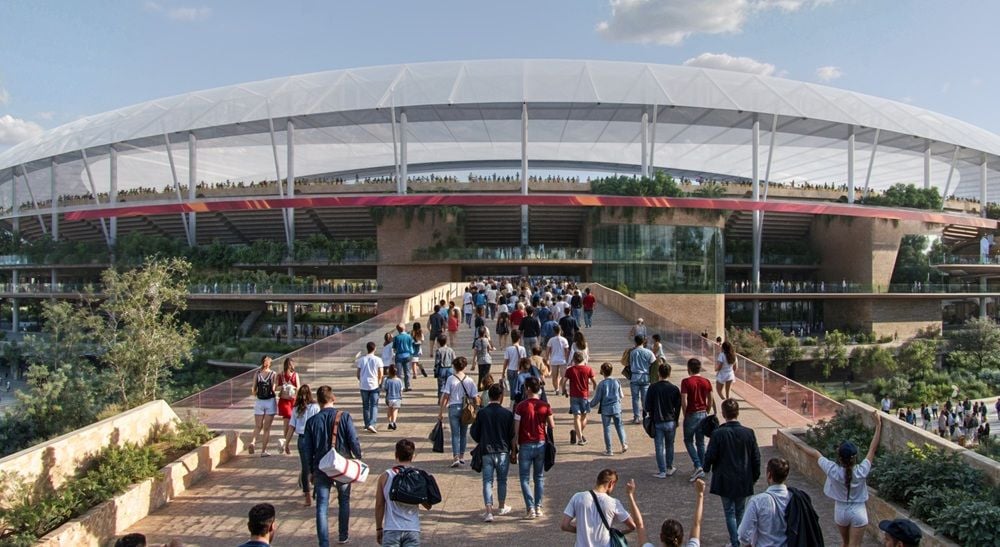
Hassell’s managing principal Lucy O’Driscoll says the design “goes beyond just meeting the needs of major international events” by being able to adapt to a range of sporting and cultural uses, making it “a genuine asset for the whole community”.
“It will not only deliver a world-class experience for athletes and fans but provide Brisbane with a vital piece of sporting infrastructure of true global calibre,” she says.
Queensland Deputy Premier and Minister for State Development, Infrastructure and Planning, Jarrod Bleijie, says today’s announcement is aimed at restoring “confidence and momentum” in the 2032 Games infrastructure program.
“COX, Hassell and Azusa Sekkei have developed a design concept that celebrates the best of our unique Queensland lifestyle and character in a truly magnificent vision for our stadium,” says Bleijie.
“The team is in place to see the stadium come to life in design and construction over the next few years and ensure the new Brisbane Stadium will be the pride of Queensland beyond 2032.”
The design consortium is being supported by global engineering firms Arup and SBP to bring the project to fruition.
)