)
Few would associate water purification and chemical remediation with negative side effects for the environment, but the use of activated carbon derived from coal puts a dampener on these otherwise benign activities. A startup built from University of Adelaide research is out to remove this drawback, as well as all the emissions.
With an operational commercial facility in Adelaide capable of producing 400 tonnes of sustainable activated carbon annually, and four larger plants being rolled out globally under a capital-light partnership model, deep tech startup Bygen had little trouble convincing investors to participate in its latest $3.5 million raise.
Within 18 months of its $2.6 million Series A, Bygen has attracted further investment from existing backers including Breakthrough Victoria, Alberts Impact Ventures, the Investible Climate Tech Fund, Artesian and the University of Adelaide, as well as many angel investors who have supported the company since day one.
"As far as capital raises go it was not the most difficult process to manage from our point of view. We were actually oversubscribed just based off the demand from existing shareholders," co-founder and CEO Dr Lewis Dunnigan tells Business News Australia.
"We didn't need to raise any external funds for this round. That was obviously a good vote of confidence in what we’ve done in the last 12 months and the support of our shareholders."
He says proceeds will go towards building out Bygen's current team of nine staff, following three hires so far this year, as more projects are deployed worldwide while staying at the forefront of R&D.
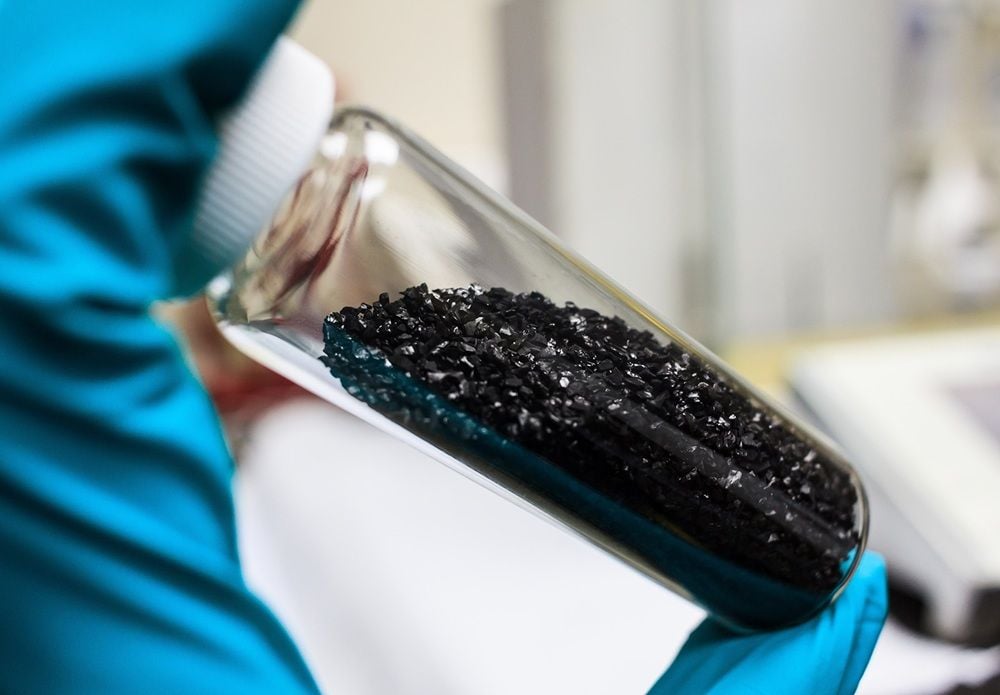
The core focus will be securing technical validation for its low-temperature activation (LTA) technology that turns nut shells and wood into activated carbon for a variety of use cases, as well as commercial validation for the business model.
"That'll be the trigger for us to go out and do a Series B raise next year, which will have to rely on some new investors coming in to accelerate the deployment of our technology across the projects that we have in our pipeline, and get us to the point where we can execute five or 10 of these projects every year," he says.
"Our internal metric is that if we can do that over the next five to six years, then we’ll be one of, if not the largest, activated carbon company in the world."
If this is achieved it would have implications for the emissions generated by the industry, whereby currently charcoal is constantly heated to extremely high temperatures using steam at 1,000 °C.
"Every life cycle analysis that we've seen places the emissions from every tonne of activated carbon that's manufactured that way at somewhere between 10 and 20 tonnes of carbon dioxide," the co-founder explains.
"It depends where you draw the boundaries but in principle there are around 3 million tonnes of activated carbon made from coal every single year, as far as we can see.
"If it's up the higher end of that scale, you’re talking about 60 million tonnes of carbon dioxide associated with this manufacturing. If you factor in everything else around the mining of the coal and the transportation, we internally estimate it as over 100 million tonnes."
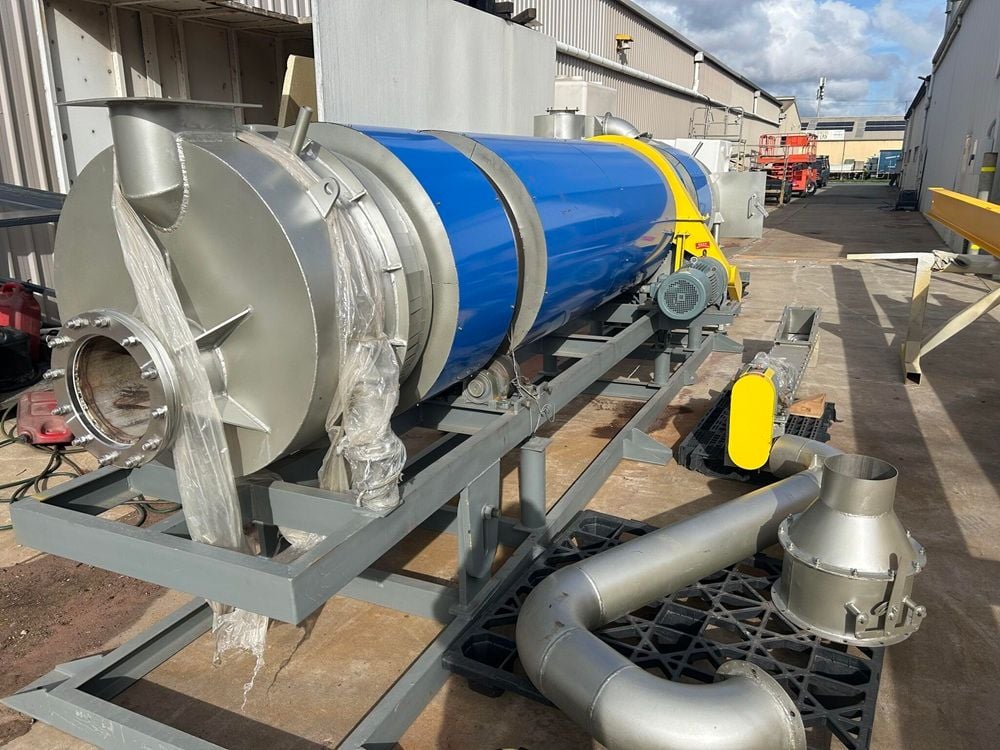
In contrast to the endothermic reactions in conventional production, Bygen’s activation process is exothermic and therefore does not require an input of energy or heat into the process during continuous operation.
Instead, the process uses a proprietary mixture of gases that can be applied at much lower temperatures to the charcoal. Additionally, hot gases produced as a byproduct of Bygen’s activated carbon production can be captured and turned into energy for use elsewhere.
"It’s entirely self sustaining - it doesn't need any energy put into the system, it generates its own heat, eliminating the use of fossil fuels entirely...we actually sequester carbon in our product, so it's like a net carbon sink," he adds.
He believes the company's activated carbon will be certified as carbon negative in the coming months. As the technology currently stands, as a replacement it is estimated to remove around 40,000 tonnes of carbon dioxide per production line.
The potential impact of these efforts is underscored by the role played by activated carbon in industrial processes with positive outcomes for public health and the environment.
Dunnigan explains that because activated carbon is so porous, with one gram containing around 1,000 square metres of internal surface area, the material acts a little bit like a sponge in absorbing contaminants from liquids and gasses to make them clean.
"It has has lots of really important uses like drinking water treatment, wastewater treatment, gas purification from heavy industry, and it can even be used in things like treating contaminated soils.
"One of the use cases we're most proud of is our activated carbon is being used to remove a contaminant called PFAS (per- and polyfluoroalkyl substances) from a water system in Australia.
"It's working with a council to do that. The carbon has been there for I think nine months now, and the testing’s proving that it’s actually removing the PFAS from that water at quite a healthy rate."
He adds Bygen is working with a lot of other companies within their existing infrastructure, replacing the activated carbon they use with the company's more sustainable product, and measuring its performance.
He says the are currently four more facilities that are contracted and being built or installed at the moment, three of which are in the US and one in Malaysia, alongside a pipeline of projects that are both domestic and international.
"We don’t build, own or operate facilities in all the locations where we’ve got projects – we actually license our technology to local partners who have access to those raw materials in one way or another," he says.
"The project partner purchases the plant from us, and they own and operate that asset. We license the technology to the partner to operate using our IP, and we get paid royalties based on the sale of the activated carbon.
"The actual business model itself is lends itself to being more capital light. Each project that we’re taking on, we’re not funding the actual capex, so we don’t need to raise huge amounts of money to scale the business, compared to someone who’s going to be owning and operating very large processing facilities."
When asked about the moat that Bygen has around its IP, Dunnigan replies that he often fields this question from investors.
"It's a multi-faceted approach. Fundamentally, the production technologies have patents, and if there ever was any concern around that, you can rely on the legal protections offered," he says.
"That's not necessarily an excuse to go out shouting from the rooftops about what you're doing and how you're doing it. We retain a lot of trade secrets and keep them internal to us.
"The company didn't just come out of nowhere with a new piece of IP in the deep tech space. It was the result of years of work that had been going on at the university and the academic rigor that came out of that."
That research was undertaken in the lab of University of Adelaide academic and Bygen co-founder Philip Kwong, while another co-founder, Ben Morton, no longer works at the company but was "integral in the first couple of years when we were taking the idea from the lab and trying to scale it out".
He concludes the US market is "fundamental" for Bygen's growth plans, as is Southeast Asia, but he'd also like to expand to Europe where the company is not yet particularly active.
"Europe has very advanced economies, it has a lot of water treatment, a lot of standards, so it's a really big market for activated carbon," he says.
"At the moment it really heavily relies on imported carbon from South Asia, Southeast Asia, China, and we do view production in Europe as a target for the company in the longer term.
"One of the things we know from talking to customers and which is really quite a big part of what we're trying to do, is to have production very close to where the consumers are, the end users are."
A representative from Investible, which has now participated in two funding rounds for Bygen, says the pioneering climate tech company is transforming how the world produces activated carbon.
"As an early-stage climate investor, we’re focused on accelerating decarbonisation in Australia and Southeast Asia, and we see Bygen as a company that can deliver significant impact in the region," says Investible investment principal Ben Lindsay.
"Our partnership with Bygen is still in its early stages, and Lewis’ openness to Investible increasing our ownership stake speaks to the strong, collaborative relationship we’ve built together."
)