)
41. Josh Simons (34)
Vinyl Group, Vampr
Melbourne
A visionary in the music-tech space, Josh Simons transformed his career from indie rocker to tech entrepreneur, co-founding Vampr with Barry Palmer as a swipe-discovery social network for musicians that has become the leading platform of its kind worldwide.
In 2023 Vampr was acquired by ASX-listed music credits company Jaxsta, and Simons became co-founder and CEO of the combined company, now known as Vinyl Group (ASX: VNL).
Under his leadership, the group has been on an acquisition drive, buying up the likes of The Brag Media, Mediaweek, Funkified and Concrete Playground, as well as a licensing deal for Refinery29 in Australia, all forming part of Vinyl Media.
“Everything that we do, and really our reason for existing, is to create products and tools to help the music ecosystem thrive, and in order to do a good job of that you need distribution,” says Simons.
“The missing piece of those platforms is they're never very much used for fans. We had fans on both that are just obsessed with music and wanted to read metadata and check out credits, but it's a niche.
“There’s a world where Vampr users want to promote their single, and just like you can use Facebook ads to boost your new song on Facebook, now you can, in theory, be able to boost it on Rolling Stone or any one of our mastheads frankly.”
In the December quarter the group also signed a two-year agreement with Songtradr, the world's largest business-to-business (B2B) music licensing platform and a Vinyl Group shareholder, to represent its digital inventory.
The company also launched its e-store for records and merchandise, Vinyl.com, into the UK market.
42. Johan Misquitta (31)
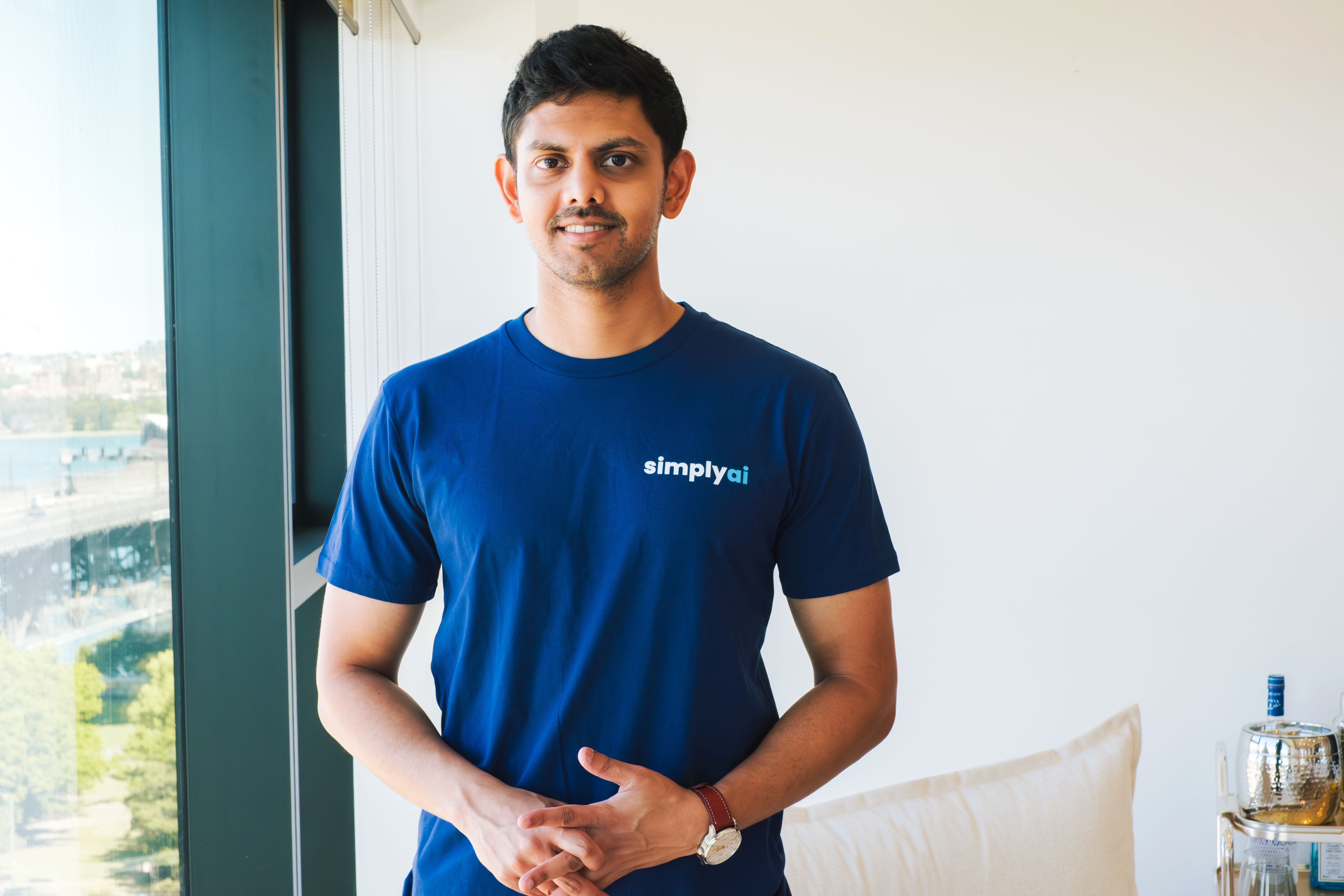
Simplyai
Sydney
Having built a strong reputation as an AI, automation and data modernisation provider to a wide range of companies, including all of Australia’s Big Four banks, Simplyai is taking its innovation to the next level with the recent launch of a collaborative centre of excellence.
The Simplyai Catalyst innovation hub is Microsoft-centric and will attract partners to co-create tailored AI solutions, including through industry-specific AI accelerators for industries including financial services, government, retail and telecommunications.
SimplyAI itself was founded by Johan Misquita, Anthony Scott, Darren Geros and Jason Catania in 2019 with an aim to help organisations leverage the potential of intelligent automation, data, AI and analytics to grow their businesses and drive productivity.
The company was formed through an effective merger of two separate startup ideas – one by Misquitta and Scott, who were working exclusively to create AI programs, and another by data specialists Geros and Catania.
After a chance meeting with Geros and Catania to collaborate on an automation and data project, all four decided to join forces to create a unique startup venture that drew on their respective talents in AI and data.
Last year represented a period of team realignment and a focus on growth through what Misquitta describes as “significant new projects”, including some of the largest Microsoft PowerPlatform implementations in Australia.
“Our AI focus has been fundamental, and we have assisted organisations, both in the public and private sectors, establish AI governance, best practice frameworks as well as develop, finetune and deploy AI products and LLMs (large language models).”
43. Alexandra Rofe (36)
Send Payments
Gold Coast
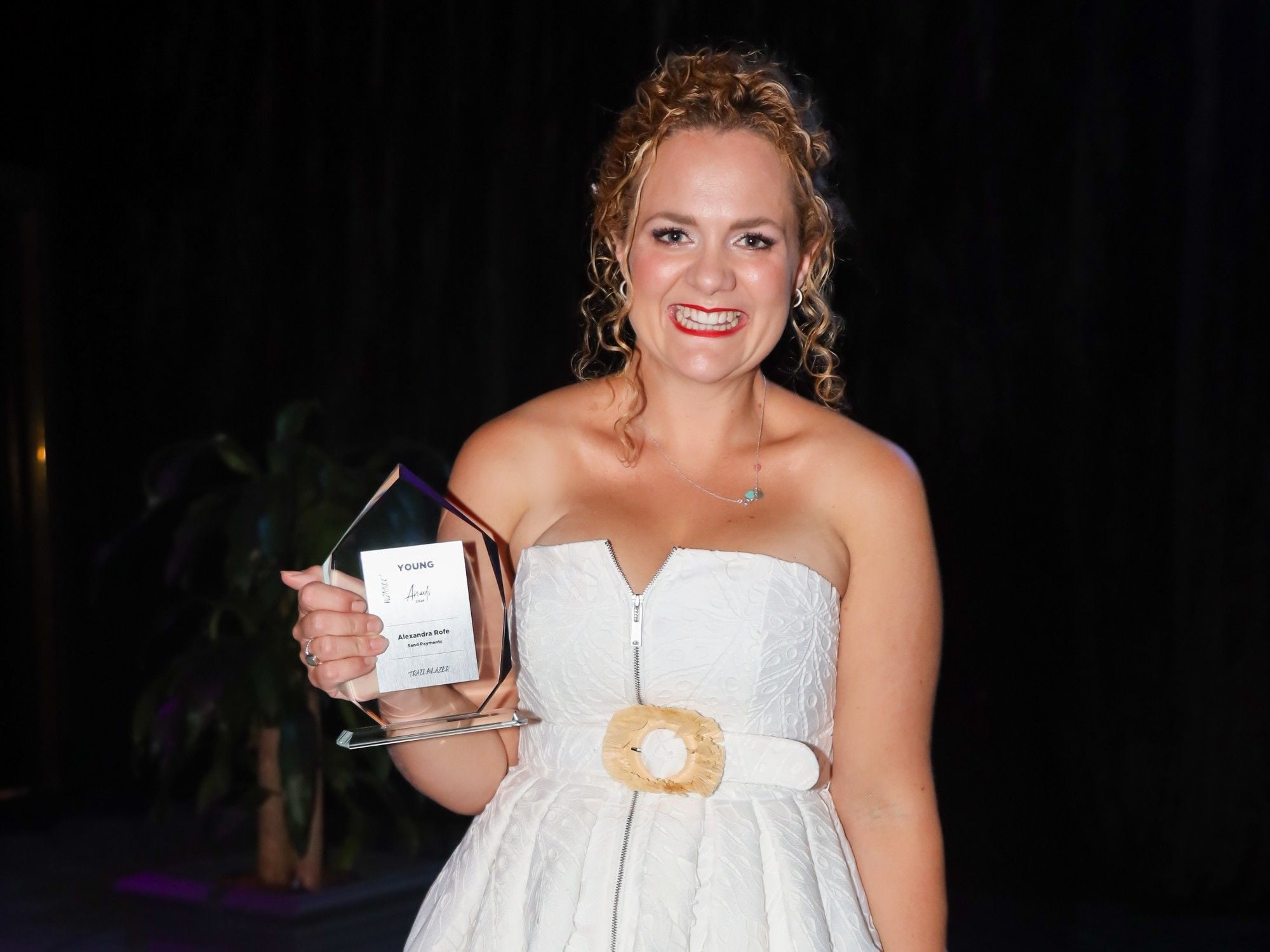
Alexandra Rofe, alongside co-founders Paul Billing and Ian Cragg, is disrupting the foreign exchange industry with Send Payments, a fintech that provides digital payment solutions for businesses and consumers looking to move money internationally.
Founded in 2019, the team has leveraged its experience across the UK and Australian foreign exchange (FX) markets to build a platform that addresses delays, high fees and outdated technology in cross-border payments.
With more than 23,000 end consumers and 1,100 corporate customers, the business operates on a B2B2C model and is now focusing on becoming an enterprise partner for companies with complex FX needs.
“We have a deep understanding of what is broken, a bold vision for the technology required and unmatched insight into what large, complex partnerships are looking for in a solution,” says Rofe.
“The FX payments and transfers market is a $150 billion fee and spread pool which is plagued with unnecessary delays, intermediary costs and legacy technology.
“Disruptors have come into the market and set the bar for a digital first consumer experience but typically put a slick front end on a legacy or manual back end that doesn't address the root cause of the problem. We knew we could do it better.”
Rofe says Send Payments’ technology solution allows partners to easily plug into what they need and retain client ownership, with its “rich” application programming interface (API) providing "FX as a Service".
44. Dr Christopher Jeffery (38)
Convergence Medical
Brisbane
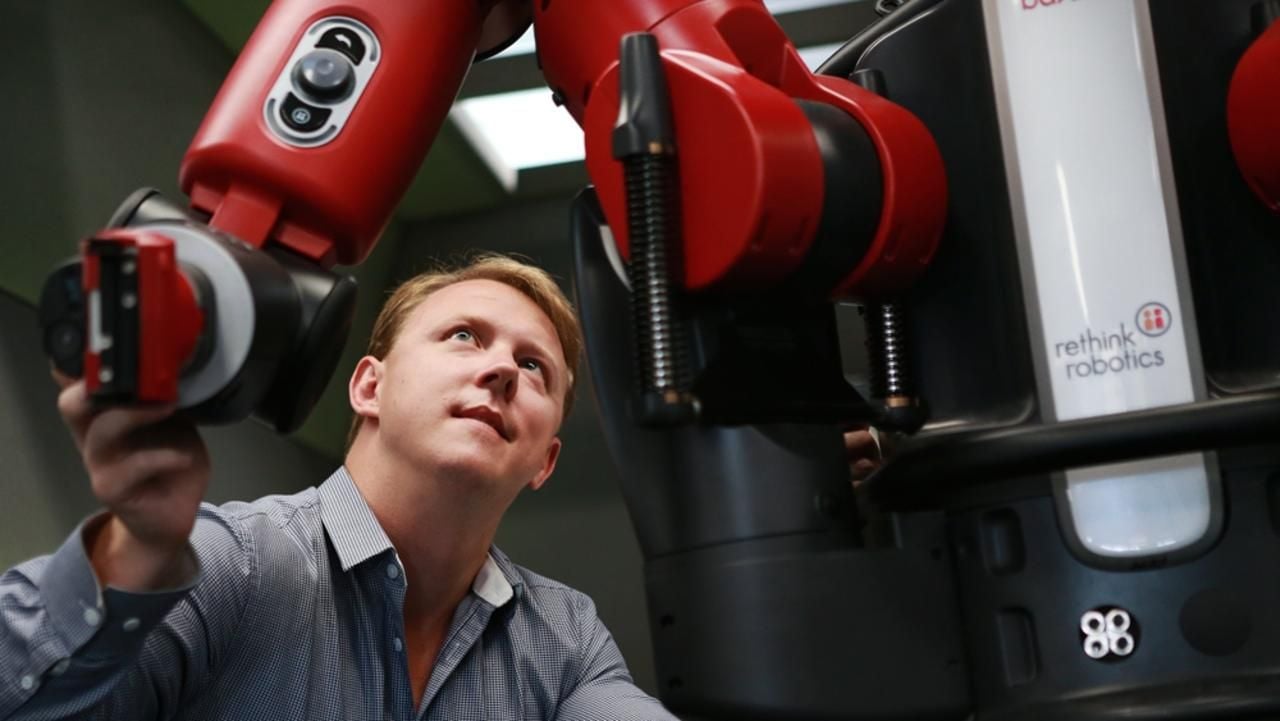
Dr Chris Jeffery, a serial medtech entrepreneur who also co-founded orthopaedic implant scale-up Field Orthopaedics and ASX-listed Audeara (ASX: AUA), is determined to reshape the future of keyhole joint surgery for injuries like the ACL in the knee or the rotator cuff in the shoulder.
Since its first prototype was released in November 2022, Convergence Medical’s surgical robot received a special designation from the US Food and Drug Administration (FDA) in 2023 and is in ongoing testing towards eventual commercialisation.
The breakthrough designation awarded to Convergence Medical by the FDA is only given to 3 per cent of all devices and pharmaceutical drugs that engage with the administration.
The third-time founder - with both a medical background in orthopaedics and engineering - is proud to be making the world’s first arthroscopic surgical robot, which has the potential to address a target market of more than 50 million patients who require arthroscopic procedures.
Jeffery says surveys show that 30 per cent of surgeons will openly admit that they’re not completely competent with their abilities to perform arthroscopy, which is due to multiple factors including the fact manual equipment is used that is still very similar to when it was introduced in the 1950s.
“My surgical experience performing operations is what gave me the deep conviction of this issue,” he says.
To simplify, he says the current technology used in the field is both outdated and disjointed, leading to limited connectivity, poor reliability and sub-optimal performance.
In addition to the “extensive cognitive burden” of these tasks and dealing with existing technologies that “break and kind of work against each other”, the operations themselves are physically straining, leaving surgeons exhausted.
“As high as 10 per cent of doctors have had more than three weeks off within the last 12 months because of this stress and strain on our body. That’s how awful it is,” he adds.
“We do on average, between eight to 12 operations per day. The V01 robot supports up to 50 operations per week, so extremely high volume.
“It’s pretty obvious when you’re a hammer and the world is nails. As a robotics engineer, when I hear there's an issue with precision where you’re getting occupational physical fatigue, and you've got disconnected equipment that's causing distraction, that screams to me mechanisation, i.e. robot.”
45. Steven Vassiloudis (33)
Novalith Technologies
Sydney
A decarbonised future backed by electric vehicles with batteries is heavily dependent on the production of lithium carbonate, which for every tonne produced currently generates 20 tonnes of carbon dioxide.
Chemical engineer Steven Vassiloudis knew there had to be a better way to extract this vital mineral, which is found within an abundant supply of spodumene rocks in Western Australia as well as other parts of the world.
“The current ‘industry standard’ approach for processing hard-rocks involves burning natural gas to heat crushed lithium-bearing spodumene concentrate to ~1,100C,” he wrote in a founder’s manifesto.
“This is then roasted in sulphuric acid, a leaching agent that draws out lithium, along with a host of other unwanted chemicals.
“The resulting lithium sulphate must then be further processed to separate it from the unwanted chemicals and converted to a useful state (as either lithium carbonate or lithium hydroxide), producing tonnes of harmful by-products and wastes.”
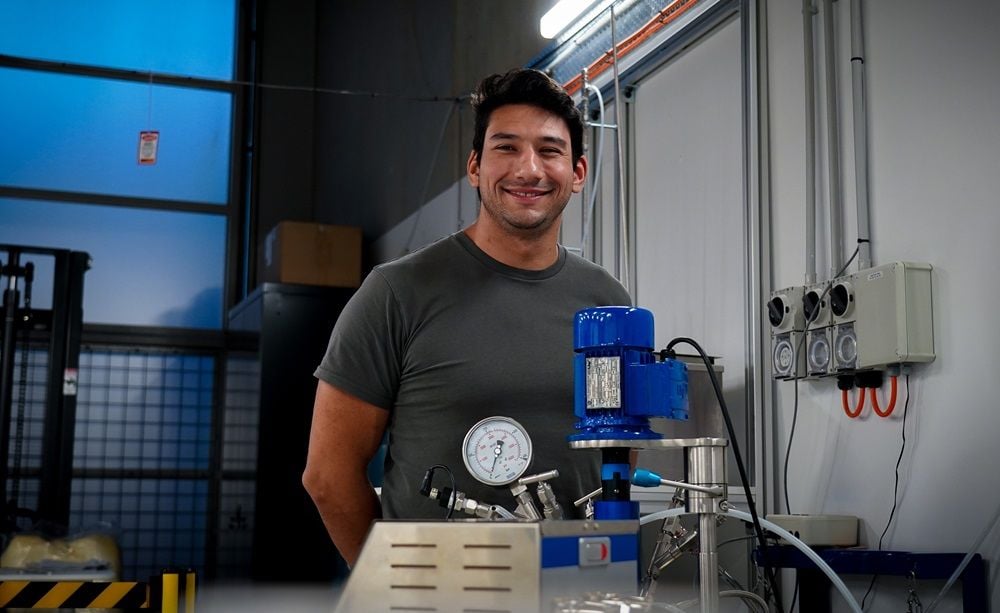
Vassiloudis came across some “interesting” technology with the potential to solve this big problem in a unique way, leveraging an innovative process to solve the future lithium shortage by producing low-cost, low-impact lithium chemicals.
Novalith Technologies, which he co-founded with fellow South African Christiaan Jordaan and his former professor Dr Andrew Harris, owns its patented technology that reduces production costs, plant costs, and plant footprints by up to 65 per cent, 50 per cent, and 25 per cent, respectively
“It uses up to 90 per cent less water, generates none of the harmful bulk wastes that plague the production processes used today and emits less than half the CO2 per tonne of lithium chemical produced,” Vassiloudis said in his manifesto.
The group has raised $42 million in capital since inception to drive this deep-tech development forward, including the completion of a pilot plant in Sydney.
Novalith’s next step is to develop a commercial lithium refinery in the USA’s "battery belt", which, if achieved, "will have the ability to process spodumene from global suppliers including the USA, Canada, Australia and beyond to support a North American lithium supply chain”.
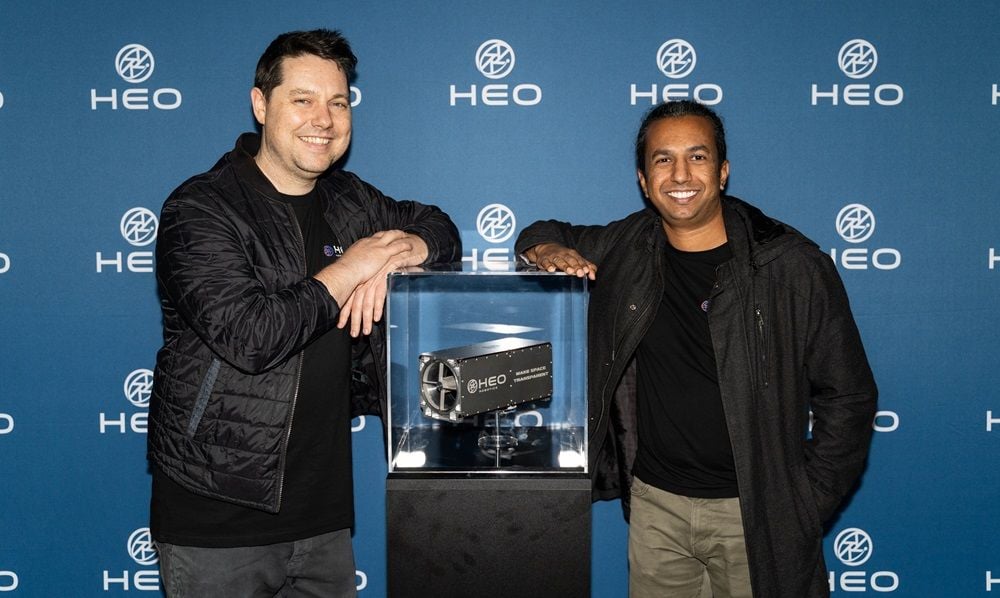
46. William Crowe (39) and Hiranya Jayakody (38)
HEO
Sydney
With a “growing constellation” of in-space sensors hosted on third-party aircraft, HEO captures on-demand images of space objects – through what is known as non-Earth imaging (NEI) - for government, defence and commercial customers.
“Our automated HEO Inspect software platform allows customers to directly task resolved images and analytics of objects in low-Earth orbit (LEO) from any internet connected device and receive results within 24 hours of successful collection,” explains co-founder William Crowe.
The company, an NEI services pioneer, partners with existing sensor constellations and also launches its own HEO sensors as hosted payloads.
It plans to deploy more than 60 such sensors in LEO by the end of 2025 and introduce its first operational sensors in Geostationary Orbit (GEO) by 2026.
The main products are its smallest application, the Holmes Mk2 Imager for in-orbit applications, and Adler which is the largest commercial camera dedicated to NEI and engineered for exceptional image quality
Partners that work with HEO include Space Machines Company, Axelspace, Satellogic, Turion Space, Sidus Space, Impulse Space Propulsion and Black Sky.
Crowe and Jayakody founded HEO in 2016 while completing their PhDs at UNSW, setting out to prospect asteroids as they fly close to earth by using a dynamic swarm of spacecraft.
They quickly found out that satellite operators needed to be able to monitor their assets in space, and the technology they created to prospect asteroids could be used to inspect broken, damaged or unknown satellites.
This led the pair to pivot their business to focus on space-to-space imaging and providing analytics to customers.
Jayakody notes the need for the identification of space objects has risen sharply given the huge number of satellites that are being launched into space.
“The average time to identify non-US satellites has blown out to approximately 50 days after launch and some objects are never identified,” he says.
“At any given time there are 500-plus unidentified objects on public catalogues. For commercial companies, the rise in rideshare launches has put satellites at risk from every being identified while lost in the crowd. We’re helping to reduce that number.”
Lifted by a $12 million Series A funding round in August, the HEO team has more than doubled in size including through the establishment of its first US office, while in FY24 the company also signed its first major contract in Japan.

47. Dr Benjamin Coorey (40)
Archistar
Sydney
After completing his PhD in Architecture and Generative Design, Dr Ben Coorey first founded Archistar in 2010 as an education portal, but in 2016 he and his brother Rob embarked on a new vision to combine architectural design with AI to streamline property development.
Their aim to enable users to assess investment opportunities, perform feasibility studies and generate design concepts has been widely embraced in Australia and abroad.
The platform is now used by 30,000 property enthusiasts in Australia with users including the likes of Stockland (ASX: SGP), NEX Building Group, Hassell, Mirvac (ASX: MGR), CBRE, Frasers Property and more.
“By digitising complex planning rules and automating the assessment of design compliance, Archistar reduces risks, saves time, and cuts costs for its users,” Coorey explains.
In 2024, Archistar strategically pivoted towards supporting governments in response to the global housing crisis.
“With cities worldwide under increasing pressure to deliver more housing, Archistar's unique, Australian-developed technology is playing a critical role in accelerating urban planning and development processes,” the co-founder says.
“Our innovative solutions, designed to streamline compliance and fast-track approvals, have garnered international attention, leading to sole source contracts with governments across the globe.”
Government clients include state departments of planning in NSW, Victoria and South Australia, as well as abroad with the City of Vancouver and the City of Austin.
In FY24 the company also entered into a pilot program with the International Code Council (ICC) and 10 of the largest cities in the US to digitise and run eCheck on the International Building Code.
“Cities involved in this pilot include Austin, Los Angeles, San Francisco, North Las Vegas, Houston, Tampa, San Jose, and several others, positioning Archistar as a leader in digitising building regulations and compliance checks across major US cities,” says Coorey.
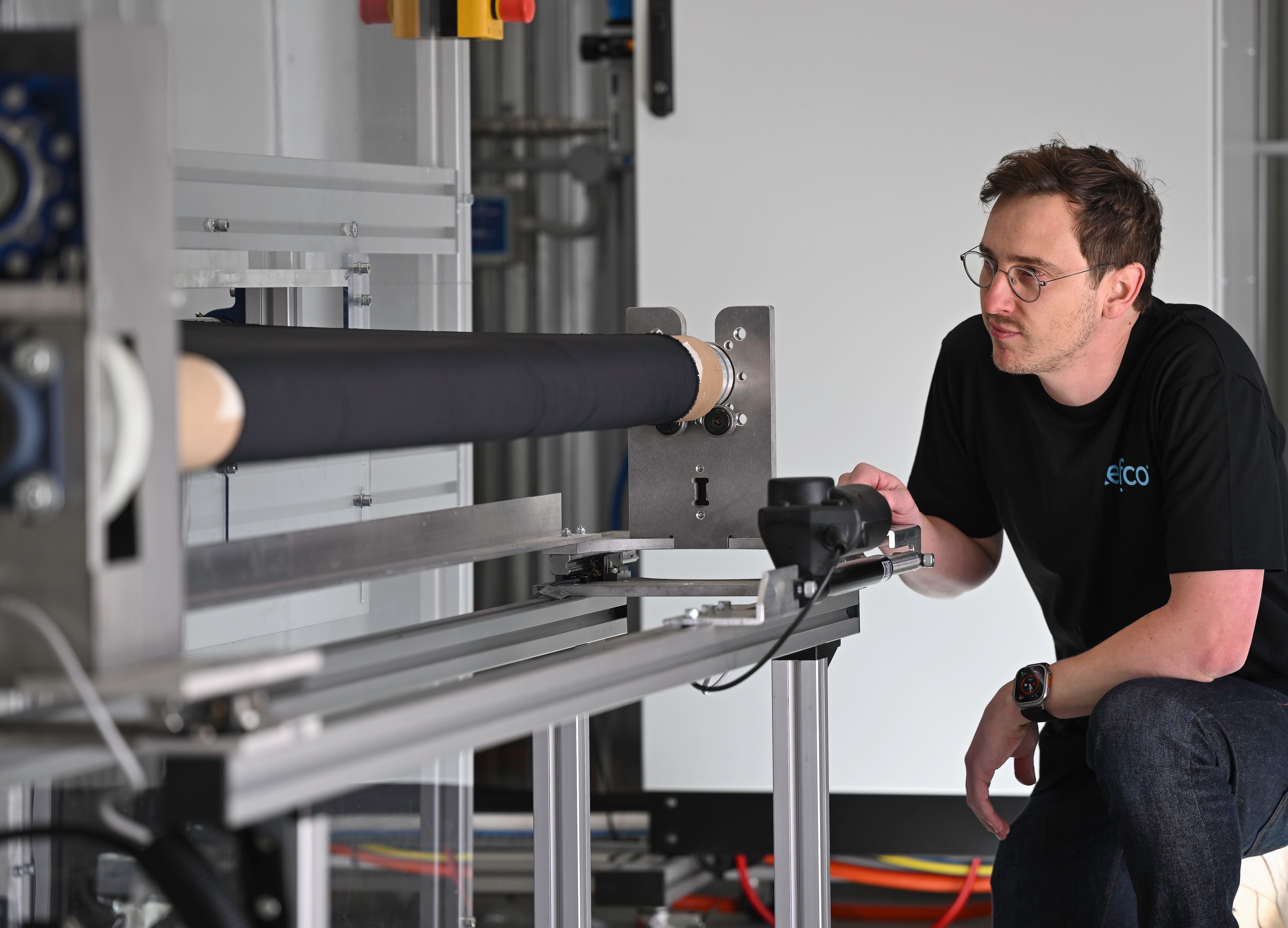
48. Tom Hussey (38)
Xefco
Sydney
Co-founded by Tom Hussey and his former boss Brian Connolly, who founded water sports clothing company Zhik, Xefco was set up with a mission to improve the efficiency and environmental sustainability of textiles.
Xefco is at a watershed moment. Now a commercial operation in its own right with its XReflex technology that lifts the thermal efficiency of insulated clothing for the likes of The North Face and Zara, its big bet is on a much more ambitious solution for the fashion industry.
The company’s patented Ausora technology promises to tackle the enormous environment footprint of the world’s dyeing and finishing industry, which is known for its massive water usage and toxic run-off into rivers, and is the source of approximately 3 per cent of the world’s carbon emissions.
In contrast, Ausora does need water and can be powered by renewable energy sources, with a much lower chemical footprint to boot.
Whilst still in the pre-commercialisation stage with pilot programs underway and construction of a machine taking place in Geelong, Xefco has generated interest in the Ausora technology from around 70 major brands and manufacturers globally.
“We estimate these leads produce approximately 9 billion metres of fabric annually,” Hussey explains.
Following a $10.5 million capital raise in April 2024, the company has doubled its team size, recruiting key personnel in R&D, engineering, business development and finance. The company is targeting the first implementation of its system this year.
“It’s not just about putting a machine in a factory to mass produce fabrics; it's about mass producing those machines,” Hussey explains.
“By our calculations the world needs about 170,000 machines to solve the problem, so the sky's the limit in terms of the size of the market and the size of the problem."
Related story: Textile manufacturing tech startup Xefco to tackle major source of global water waste and emissions
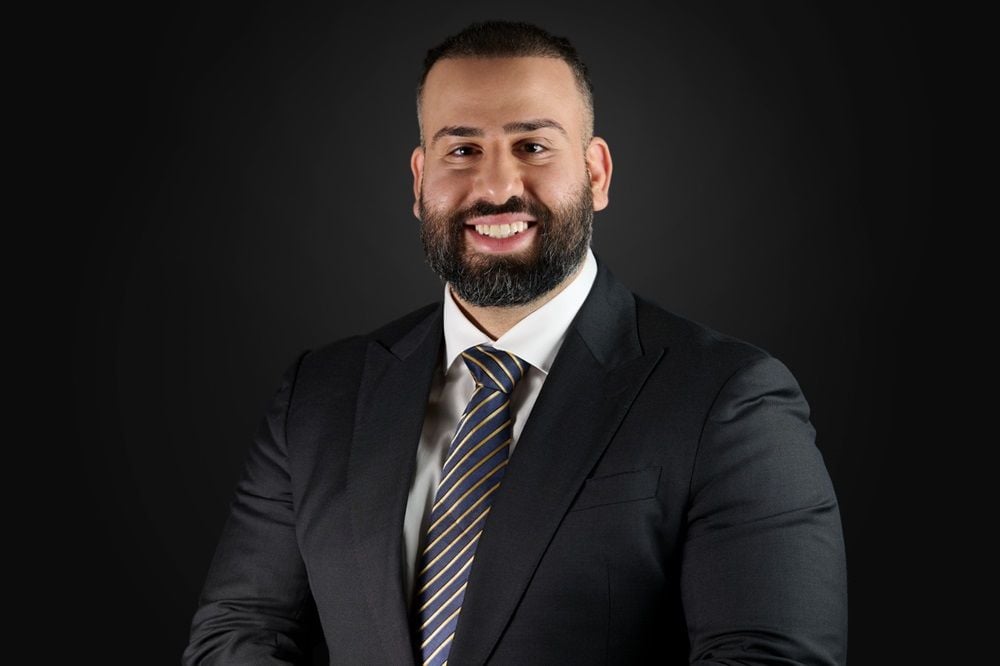
49. Sam Jamsheedi (37)
Trademark Group of Companies
Sydney
Trademark Group is a go-to platform for Australian businesses to grow and explore opportunities in the United Arab Emirates, Saudi Arabia and the broader Middle East, leading trade delegations and networking events.
Founder Sam Jamsheedi says he founded the group after viewing an opportunity for Australian businesses to be exposed to the flourishing business markets in the Middle East, and vice versa, creating a “genuine platform to connect with like-minded individuals and entrepreneurs”.
“We aim to go beyond exceptional service to develop deep and long-term client relationships, and success stories by providing end-to-end solutions to our community members active in the industrial, construction education, medical and real estate development space,” he says.
Trademark claims the platform has attracted more than 150 members to date and led to $250 million in referral business.
A key highlight from 2024 was also Trademark’s hosting of the Aussie Expo in Riyadh, Saudi Arabia, with 76 Australians travelling to the kingdom for this inaugural event, which facilitated multiple government-to-government engagements including ministerial meetings that strengthened bilateral ties.
A notable outcome from the expo was a US$60 million commitment by Sydney-based UniVerse TDAJ to invest in establishing a research hub in Saudi Arabia, representing a “significant step towards fostering innovation and collaboration”.
Prior to setting up Trademark Group, Jamsheedi founded the business Trademark Global business that handles supply chain matters for major construction projects.
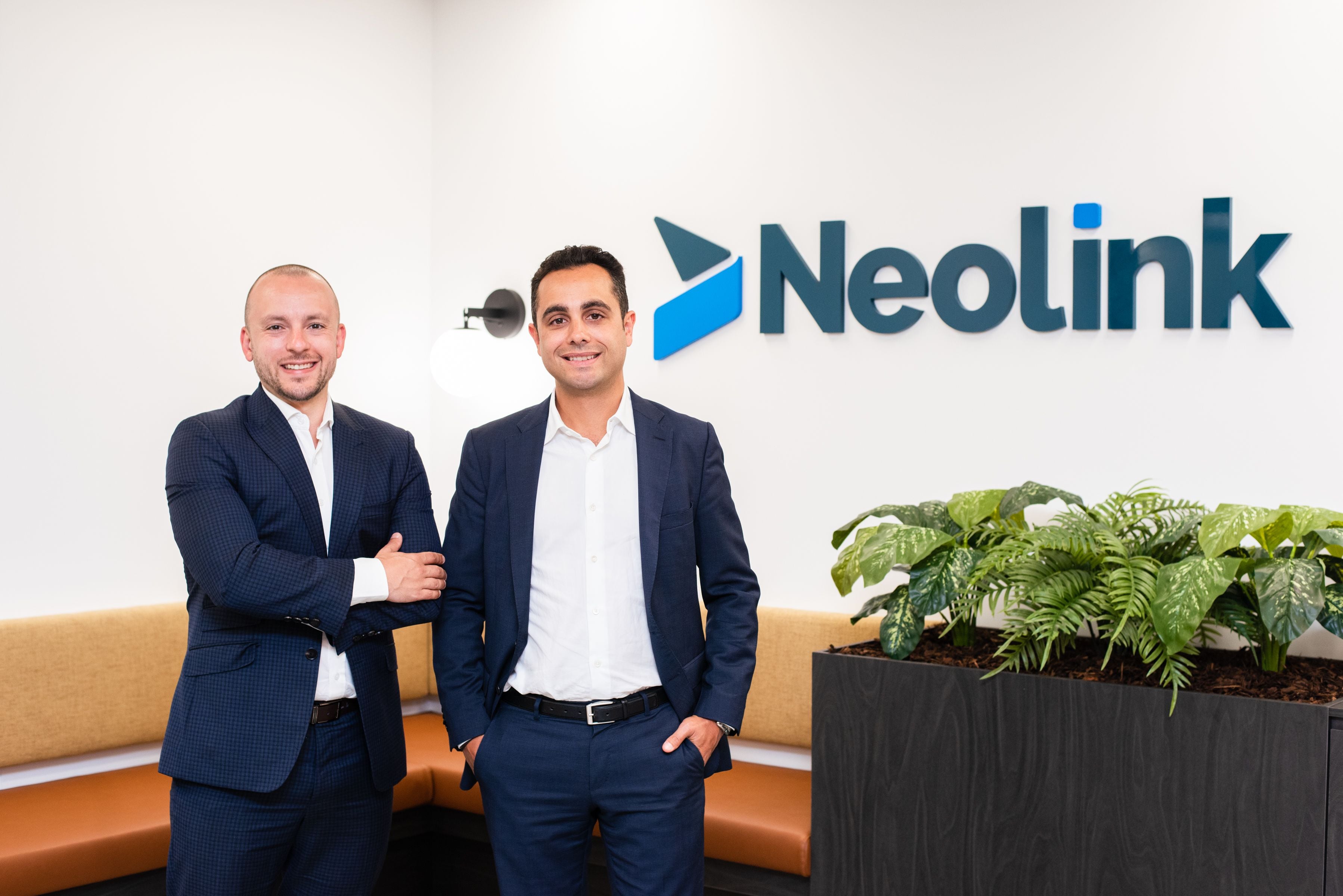
50. Sean Crook (37) and Christopher Makhoul (36)
Neolink
Sydney
Bootstrapped freight-forwarding business Neolink has taken its highly automated but staff-centric approach to challenge behemoth incumbents in the industry, resulting in a 500 per cent increase in monthly active customers last year.
Co-founded by Christopher Makhoul who had worked as an import-export clerk in Port Botany, and Sean Crook who had experienced firsthand the challenges of importing while working at beer company Lion, Neolink helps customers “navigate supply chain disruptions with ease”.
“Our single point of contact model fosters strong relationships and seamless communication,” Crook explains.
“Neolink’s customer-centric approach has fuelled sustained growth, allowing us to outperform competitors like Mainfreight, Flexport and Toll, while maintaining a focus on long-term partnerships,” Makhoul claims.
The company’s customer service credentials are backed by its embrace of new technologies, with its Neolink Logixboard platform providing tracking, insights and CO2 monitoring.
Its advanced automation and predictive workflows ensure seamless operations and help mitigate potential disruptions, but each client also has a dedicated logistics coordinator for personalised service.
“Neolink’s purpose - to redefine global logistics with innovation, efficiency and transparency - is evident in every customer interaction,” adds Crook, who says 2025 will be a year of expansion after opening in the Queensland market in late 2024, and with plans to launch in Victoria as well this year.
CLICK HERE TO GO TO THE NEXT PAGE
)