)
Melbourne-based technology company Arkeus has closed a $25 million Series A funding round to scale its AI-powered hyperspectral sensing systems for autonomous military platforms, with the capital earmarked for manufacturing operations in Queensland and the United States.
The round was led by QIC Ventures, with new investors R+VC, Folklore Ventures and DYNE Ventures joining alongside continued backing from existing investors Main Sequence Ventures, Salus Ventures and Steve Baxter's Beaten Zone Venture Partners.
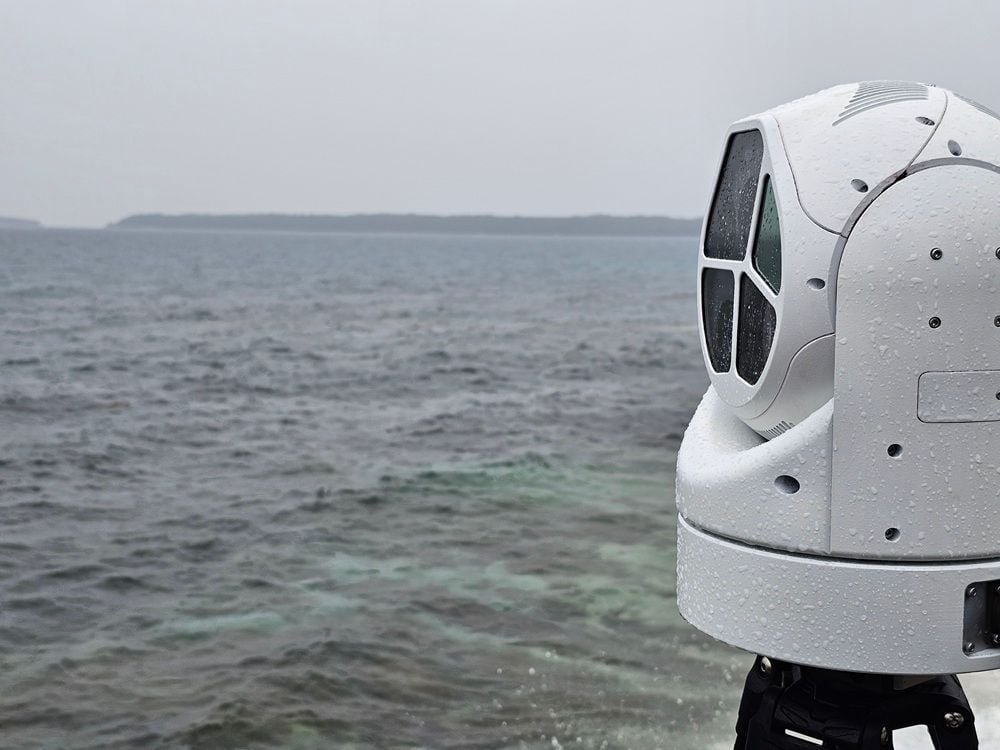
Arkeus plans to use the funds to expand its team to nearly 100 people and accelerate manufacturing and field deployment of its Hyperspectral Object Recognition (HSOR) technology, which the company says can detect targets at ranges up to eight times further than existing optical systems in degraded visual conditions such as fog, dust and smoke.
Founded in 2020, Arkeus develops sensor systems designed to give autonomous military platforms the ability to perceive and classify objects in contested environments where traditional cameras and radar struggle.
While billions have been invested globally in drones, aircraft and autonomous systems, most still rely heavily on human interpretation and external processing to make decisions.
Arkeus says its core technology captures multiple layers of visual data simultaneously, allowing AI to detect, classify and track objects across any domain, day and night, and even in degraded or contested environments where traditional sensors struggle.
The company's HSOR technology has already been selected for the Australian Army's Wide Area Airborne Surveillance (WAAS) program and is being deployed with the US Department of War.
Arkeus CEO and co-founder Simon Olsen says the raise will allow the company to meet growing demand from defence customers in Australia and the United States.
“Modern defence is moving toward systems that can operate and make decisions in real time, without relying on constant human input or vulnerable data links,” says Olsen.
“We’ve built Arkeus from the ground up for that environment. Our systems process and interpret data on the platform itself, allowing autonomous systems to act in real time without relying on vulnerable communications links.
“This capital allows us to scale manufacturing and get capability into the field faster, while expanding across a broader set of platforms and customers.
"Establishing a manufacturing and engineering base in Queensland gives us the ability to scale alongside our customers and support long-term defence programs from within Australia and across the Pacific.”
QIC Ventures investment director Nick Capell says the investment reflects a broader strategic shift in defence procurement toward autonomous, sensor-driven operations.
“We’re seeing defence move toward software-defined, autonomous systems where sensing and decision-making at the edge are critical,” says Capell.
“Arkeus sits directly in that shift, delivering a step-change in how platforms perceive their environment and how quickly that translates into action.
“At QIC Ventures, our focus is on backing technologies that matter strategically, not just commercially. Arkeus is a clear example - a company with global demand that can be scaled from Australia, while strengthening sovereign capability at the same time.”
The Series A follows Beaten Zone Venture Partners' initial investment in Arkeus in 2024, with the firm returning to back the company again in 2025.
Beaten Zone founder and lead investor Steve Baxter says the decision to double down reflects confidence in the founding team and the trajectory of the technology.
“We first backed Simon and Jonathan when this was still being proven in the field," he says.
"We came back again in 2025 because what they had built was undeniable.
“This Series A is the result of two founders who understood a problem the autonomy world is only now catching up to, and built a world-leading solution to match. We are proud to have been part of this journey from the beginning.”
Arkeus says the Queensland manufacturing facility and US operations would support both domestic and allied defence customers as the company scales production of its HSOR systems.
)