)
Whether it's receiving bags of agricultural waste on her doorstep to tinkering on prototypes without any formal training in materials science, advertising veteran Tina Funder has taken on the challenge of creating a plant-based alternative to leather that has impressed investors and environmental advocates alike, turning heads in the fashion and automotive industries.
Polishing a millennia-old business model with her own brand of figurative fine-grit sandpaper, Funder followed a "breadcrumb trail" of contacts and ideas that have led Alt. Leather to manufacturing trials from Werribee to India for the company's 100 per cent bio-based products.
She envisages a leather alternative that not only removes the need for cattle and their associated carbon emissions, but potential moulding techniques that would make materials available in precise shapes, which if successful would eliminate cutting floor waste compared to traditional production methods with cow hides.
As part of a series on the circular economy that has showcased other groundbreaking innovations, Funder's story shows how an entrepreneurial mindset of identifying a problem and tackling it with ingenuity, iteration and tenacity can yield results, but often in the most circuitous of ways.
Currently in the midst of a seed raise and with the recent granting of a $1.15 million Industry Growth Program grant from the federal government, Alt. Leather has attracted support from the likes of Main Sequence Ventures, Tesla chair Robyn Denholm, and Startmate that began with a small but pivotal investment at a make-or-break time for the startup.
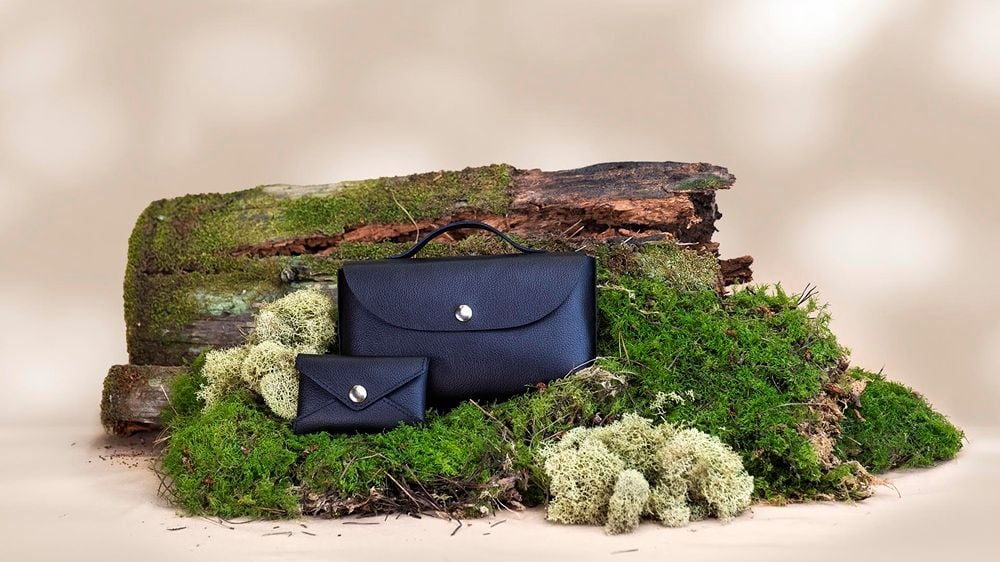
But this was not Tina Funder's first rodeo in the world of alternative leather. She arrived at the idea following a different venture during the pandemic after the discovery of cactus leather, which she used to make sustainable, plant-based handbags for an earlier company called Life on Mars.
"I was fascinated by the research that I did into the destructive nature of leather. And then I started looking around," she tells Business News Australia.
"At the time I was looking for a small bag and I came across an article that made me realise I didn't want to buy leather anymore, because I'm an environmentalist at heart.
"It was a side hobby. I was still working in advertising, but it took me about 18 months to build the brand, do all the designs, find an ethical manufacturer, and then launch it."
Unbeknownst to her at the time, through Life on Mars the entrepreneur was learning what it would mean to be the customer of her future venture, understanding what consumer-facing goods companies needed when it comes to leather alternative materials.
By the time the bags had sold out, Funder had become so disillusioned by the environmental implications of existing leather substitutes that she held little desire to commission more.
"I ended up working with a Chinese manufacturer and they supplied apple leather as well, but just after I launched the brand I came across some research papers that told me that cactus and apple were really just plastic with a bit of filler in them," she explains.
"I had this moment where I had a sustainable brand out in the world that certainly was more sustainable than traditional leather in terms of the environmental impact, so it was a step in the right direction, but it was really just replacing one big problem with a smaller problem.
"I had a bit of a dilemma. I tried to find a 100 per cent bio-based alternative and I couldn’t find one."
Chasing opportunities
What followed was almost a year of rumination as Funder interrogated her own values and what she wanted out of a business, concluding that she wasn't so much passionate about fashion and retail, but making an impact through the materials that go into products.
"What drives me as a person is making a really positive impact from a climate perspective. I didn’t know where to start with developing a sustainable alternative," she says.
"Even though I knew I probably needed some kind of scientist, I had no idea what kind of a scientist I would need to make a material like that - I was so out of my depth."
She discussed the idea of developing new materials with a friend who came from a manufacturing background - who is no longer involved - and in the summer of 2021 they approached universities to get a sense of cost, one of which quoted them $120,000 a year for what would likely be a three- or four-year project.
"I didn’t have $120,000 sitting around in my back pocket that I could spend on it at the time, so I put the brakes on again," Funder says.
"I started following breadcrumb trails through my network. I’d speak to one person, and they’d say speak to this professor at this university; I probably spoke to 13 universities, I spoke to CSIRO, and nobody was doing anything in the space."
This led her to a leather application specialist who had owned their own tanneries and worked in the supply of leather to the prestige automotive industry in Europe.
"I told him what I wanted to do and he said the automotive industry was definitely looking into this space as well," she says.
"I knew that if the auto industry is starting to move, that means that anything in design underneath that – from fashion through to upholstery – is probably going to change, because they looks to the auto industry for design inspiration.
"We ended up developing a hypothesis on how we could do it just through desktop research with this leather application specialist, and we started up our samples in his garage."
The "breadcrumb trail" networking approach also got her in contact with a scientist who could provide the necessary materials, much to the bemusement of Funder's husband and children.
"He would literally come around and drop off bags of agricultural waste on my front doorstep, so I had everything from oat straw through to lentil – every possible agricultural waste stream you could imagine," she says.
"It looked like a paddock, my front porch - it was just bags and bags of ag waste.
"It stayed on my porch for many months. We visited hemp farmers all over Victoria, and then I decided that if I was serious about doing this we probably would need to set up a lab."
Early lab results and vision attract attention
At this point Funder found a chemical engineer and moved into the biotech co-working space Colabs, renting a bench in the lab to get the material to a "stage where it looked like it was starting to resemble something a little bit like leather".
"I was working on clients at night and working in the lab during the day, and the acquaintance couldn’t continue on - we were not paying ourselves anything," she says.
"These early-stage samples were made using rice husks. I was in the lab by myself, causing absolute chaos for three months. We had some small investment from Startmate – in the early days we had a $25,000 investment from them through a program which was for founders that had bold ideas but no commercial products."
Funder says that all who took part in that initial Startmate investment have continued on as investors.
"That was amazing that first investment, not only because it allowed us to rent the lab for a little while, but also some of the first believers who gave us the tick of approval through that Startmate investment are still with us today," Funder explains.
"One of them who has come on to be our fractional CTO has invested in multiple rounds; he’s ex-Tesla, ex-Carbon Revolution."
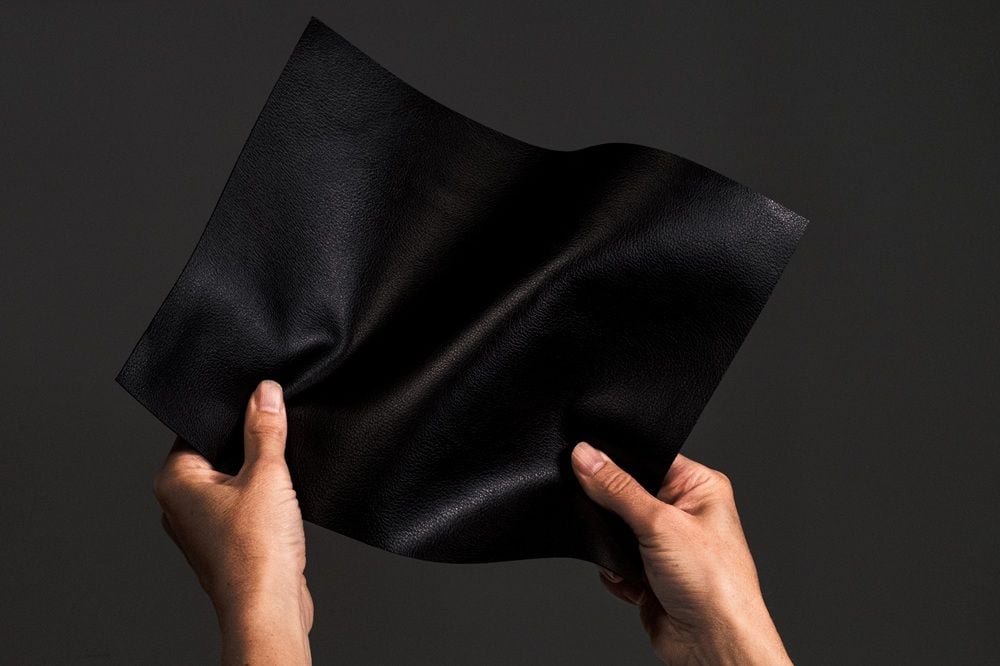
The entrepreneur tinkered away on the materials and admits she was able to resolve some issues "by accident".
"Surprisingly enough, in the three months I was there I made quite a significant amount of progress; not because I understood the chemistry, but because I was trying stuff that chemists probably just wouldn't ever consider trying," she says.
"I started doing textured patterns on the material so that it looked and felt like leather, and I did some dye experiments. I started making larger pieces so that I could start making products."
At the same time she was doing investor outreach and put out a monthly newsletter.
"When I started making items out of the large sheets, investors started coming to me saying, ‘if you’re interested in raising, we’re interested in investing’," she says, adding that she mocked up some keyrings and wallets from the material.
"I think that because I probably put less of a chemistry bent on it and more of a marketing bent on it, it looked like we were making significant traction because I was making little wallets out of this ‘leather’.
"What none of us realised at that stage, because we'd done zero mechanical property testing, was that we didn't really have a usable product."
Securing technical expertise
Once a $1.1 million funding round got over the line at the end of 2023, Funder was in a position to address those scientific shortcomings, taking on two students and two full-time scientists to help take Alt. Leather to the next level.
"2024 was a massive year. We got into the CSIRO accelerator program, which was a cross-border program that took us to India where we did a whole lot of industrial trials," she says.
"It forced us to scale, really fine-tune the product and scale to larger sheets so that we could do industrial testing and footwear and accessories. We moved into Monash University in 2024 as well to give us access to advanced equipment, and then in 2025 we've just been refining the product.
"We've had a couple of kickstart programs set up with CSIRO too - one was manufacturing trials of our product out at Werribee where they have the Food Innovation Centre, and we've got a CSIRO kickstart program for characterisation and molecular testing."
Funder says the company has had conversations with a number of large auto brands as well as Tier 1 auto suppliers, but for now Alt. Leather is targeting the "lower hanging fruit" of accessories and footwear and fashion.
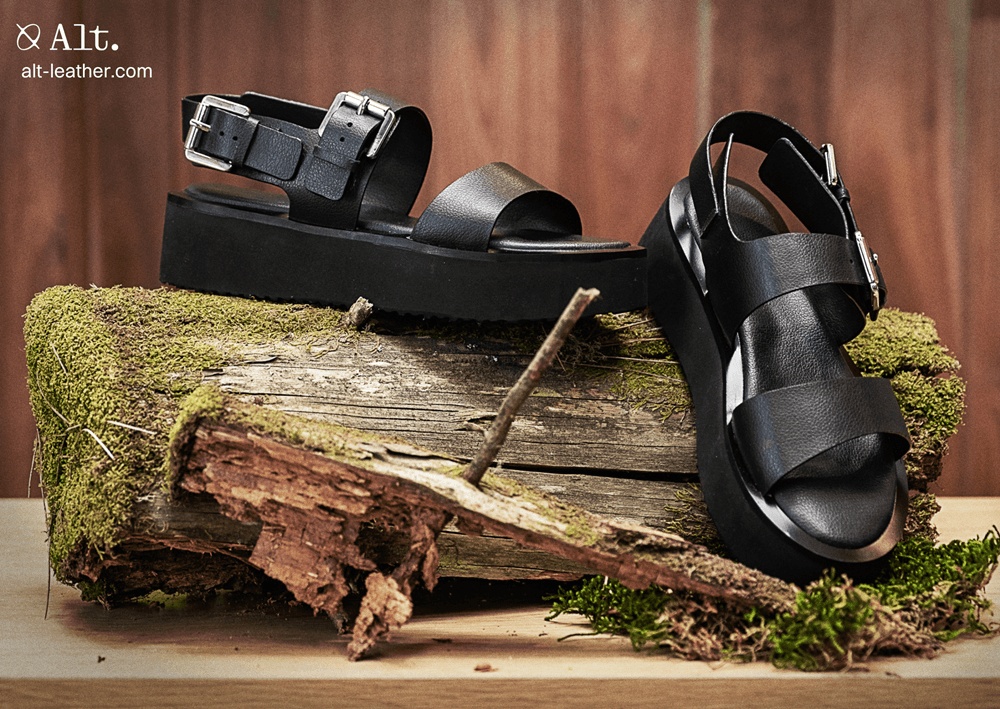
She claims Alt. Leather is one of the only companies in the world to have achieved a 100 per cent biobased alternative that contains zero animal products and zero petroleum plastics.
"Our material is three times less carbon intensive and five times less water intensive than traditional leather. It contains no toxic chemicals and has a clear end-of-life solution, having been tested under industrial composting conditions as safe for worms and germination," she says.
"Our breakthrough material hasn’t gone unnoticed - Alt. Leather has already graced the runways of Paris Haute Couture Fashion Week.
"To think that less than three years ago we were operating out of a garage, and today we’re standing on the world stage, is quite remarkable."
Progress over perfection
When asked about her philosophy on building startups in the circular economy, Funder says it pays not to strive for perfection in every single way.
"I like progress over perfection. I know it sounds cliched, but it’s so important because if you try to tick every single box you're just not going to make fast enough progress," Funder says.
"If you sit around trying to design something perfectly from the outset, you literally will never get started, because it's really, really hard to tick every single box, because everybody’s going to want something different.
"Some people are going to want to be less carbon intensive, some people are going to think that end-of-life is more important, some will want a really long-lasting product, and some just want something that's going to be home compostable. If you’re trying to be all things to all people, you're going to get so lost."
For Funder longevity of the product is an important box to tick, even more so than biodegradability, as "the longer a product lasts, the less likely it is to end up in landfill anyway".
"Our material degrades under industrial composting conditions without a trace, but if we can make a 100 per cent bio-based product that's going to last for 10 to 15 years, that's the ultimate goal," she says.
"I think probably one thing that we've also done quite well, which our team of scientists finds frustrating, but it's just a necessary evil of being in a startup I suppose, is that we've always run formulation development in parallel with process and scale-up optimisation.
Even though this approach has been the cause of "endless frustration", running two streams in parallel means you're "always being uncomfortably ahead of where you should be", according to Funder.
"You can do all the QA (quality assurance) testing that you want in the lab against ISO standards, but you put it in a shoe and the material behaves completely differently. Unless you're putting it in shoes along the way, you don't know how you need to adapt the formula."
As the company enters an "exciting" pilot phase, Funder is also enthusiastic about a longer-term ambition to produce the material on a larger scale in rolls.
"That offers a massive commercial advantage to customers, because if you imagine a hide it’s quite an awkward shape, and it's probably got a lot of defects," she says.
"Typically with an animal hide there's a lot of cutting floor waste, whereas with a roll that’s completely defect-free, which is what we’ll be able to produce, you can fit lots of different shaped designs into the lineal meterage of a roll and there's significantly less cutting floor waste. So there's a cost advantage to buying in a roll compared to hides.
"The other thing that we can do that you could never do with an animal is moulding. Because our product is a dough, we can apply moulding techniques to create the precise shape of the end product, which completely eliminates cutting floor waste providing both environmental and commercial benefits.
"We have an ability to revolutionise the way you manufacture leather."
)