)
Advanced Navigation has completed a critical terrestrial validation for its LUNA technology that the Sydney-based company describes as a pivotal step towards autonomous lunar exploration.
The navigation and autonomous systems developer says that the LUNA (Laser measurement Unit for Navigation Aid) sensor exceeded the performance requirements for an upcoming mission following a series of “punishing” Moon-like trials on Earth.
The IM-4 mission, which will include NASA payloads, is being undertaken by commercial lunar surface delivery provider Intuitive Machines.
The successful tests clear the path for LUNA to enter the final stage of space qualification.
“For decades, landing on the Moon has meant flying with only partial vision in the final kilometres," says Chris Shaw, CEO and co-founder of Advanced Navigation.
"With no GPS to guide them, landers depend on a combination of sensors that can introduce drift or deliver incomplete data - turning every descent into a high-stakes calculation where a single error could mean mission failure.
“Our LUNA sensor aims to give lunar landers and rovers hyper-accurate ‘laser vision’ to see their own speed and position in the darkness of space, potentially making crashes a thing of the past and paving the way for safe, autonomous exploration.”
Shaw says the technology delivers the “predictability, reliability and precision" that lunar missions need. He notes that the lunar south pole is marked by deep, permanently shadowed craters that never receive direct sunlight, creating extreme darkness.
Intuitive Machines’ IM-4 Nova-C class lander is scheduled to land there in 2027 under NASA’s Commercial Lunar Payload Services initiative.
Advanced Navigation says the performance of LUNA during testing has given the mission a high degree of confidence moving forward.
LUNA provides “laser light vision” to eliminate the gamble of landing on the moon where there is no atmosphere or GPS, lighting is unpredictable, and the terrain is riddled with craters.
The system uses laser beams to deliver a constant, live feed of the lander’s true 3D velocity and altitude relative to the lunar surface.
This stream of precise data acts as a real-time correction, turning a high-stakes “partially blind” descent into a controlled, accurate landing - a necessary step for enabling true autonomy on the Moon.
“Advanced Navigation’s lightweight, high-performance sensor aligns with our strategy to reduce mass while increasing capability, and it complements our precision landing technology by adding critical velocity and altitude data during descent,” says Dr Tim Crain, chief technology officer at Intuitive Machines.
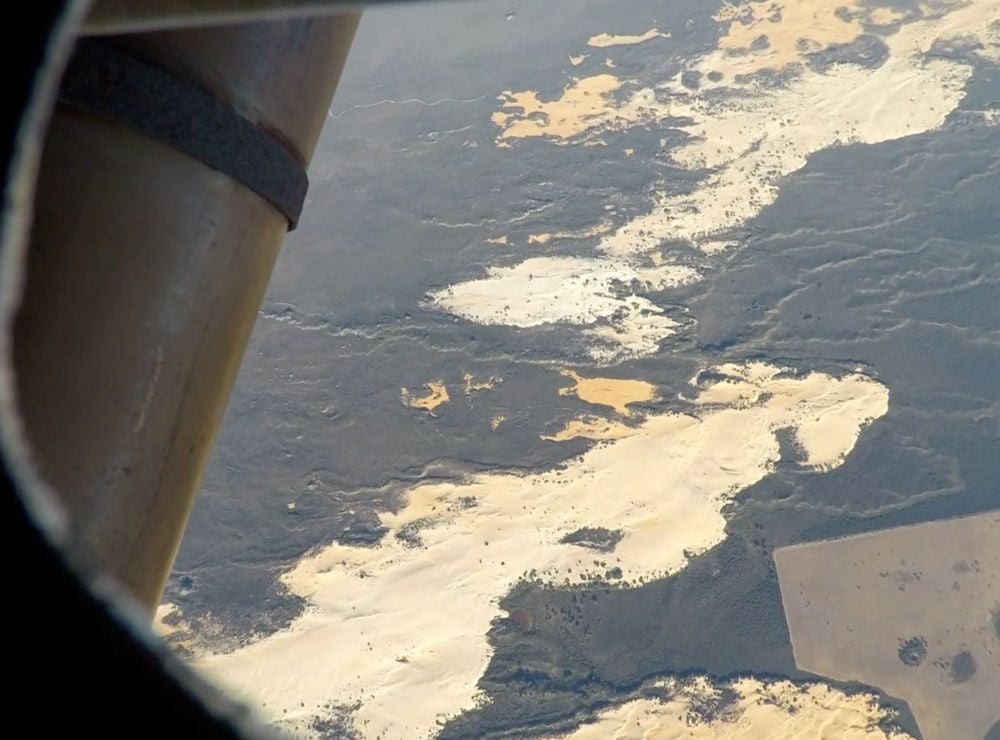
Among the simulations used to test LUNA, the system was flown on a light aircraft over the sandy terrain of Western Australia's Pinnacles Desert, which served as a proxy for lunar regolith.
In these GPS-denied flights, the company says the system demonstrated “a mere 28 metres of error after 100km of flight”.
"The LUNA sensor is a testament to the talent and innovation within the Australian space sector and paves the way for our nation to play an even greater role in the future of lunar exploration," says Enrico Palermo, head of the Australian Space Agency.
Advanced Navigation is also adapting the LUNA capability beyond the Moon by building on its rigorous testing campaign to create a terrestrial version which will be commercially available later this year.
)