)
After five years developing health-tech platform Able Digital Wellness, founder Scott Chapman is aiming to scale operations with seed funding from Perth-based venture capital firm PLT in the first capital investment for the startup since inception.
Chapman, who has bootstrapped Able Digital Wellness until now, says the $400,000 capital injection from PLT may be modest, but it’s a major step for the business which already counts the Queensland Government and disability services provider Aruma among its biggest clients.
The seed round has given the Able Digital Wellness business a pre-money valuation of $2.5 million and provides the startup with the funds to target 5,000 active users over the next 12 to 18 months.
The Gold Coast-based Able Digital Wellness is a content-focused platform that supports primary carers and individuals with a disability by delivering exercise, nutrition, sports and mental wellbeing programs that are tailored to meet the personal needs of users.
The platform, which operates a business-to-business and a business-to-consumer (B2C) model, is also aimed at improving staff retention rates for disability service providers.
Chapman, a seasoned entrepreneur who has self-funded Able Digital Wellness with the support of his existing portfolio of Zambrero restaurants, says his nephew was the inspiration for the health-tech startup.
“My nephew moved into a disability house about five years ago and that was our first foray into the industry,” Chapman tells Business News Australia.
“We realised pretty quickly when he moved into the facility that any focus on preventative health strategies, healthier eating and physical activity just didn’t exist.
“Being able to make your own decisions - to have choice and control - when you have a cognitive disability is not always the greatest thing. My nephew started to take things into his own hands and have ginger beer for breakfast, then a block of cheese and five energy drinks in the afternoon and he put on about 30kg in three months.”
The Able Digital Wellness programs have been built alongside the Queensland Academy of Sport, Advance Queensland and clinical validations by Griffith University, delivering wellness content, blogs and videos from professionals to help support staff to understand how they can suggest healthier eating to their patients or promote a more active lifestyle.
“We also have tracking and reporting tools that go straight back to family members or anyone actively involved in the person’s care,” says Chapman.
“There are many proactive support staff out there that do focus on things like this because they live and breathe it in their own life.
“But if you are someone who doesn’t focus on activity, exercise, nutrition or even just practicing breathing and mental wellbeing for yourself, it’s not something that you are going to proactively push onto someone in your care - especially someone with a cognitive disability.
“Our belief, and what has come through our research, is that being able to help support staff is really important by giving them the resources and tools that allow them promote those things to their patients.”
Chapman points out that the aim of Able Digital is not simply to focus on “healthy active minutes” for those with a disability, but also on prevention of issues such as diabetes, heart attack and stroke.
“With the correct resources and with motivation you can do some pretty cool things,” he says.
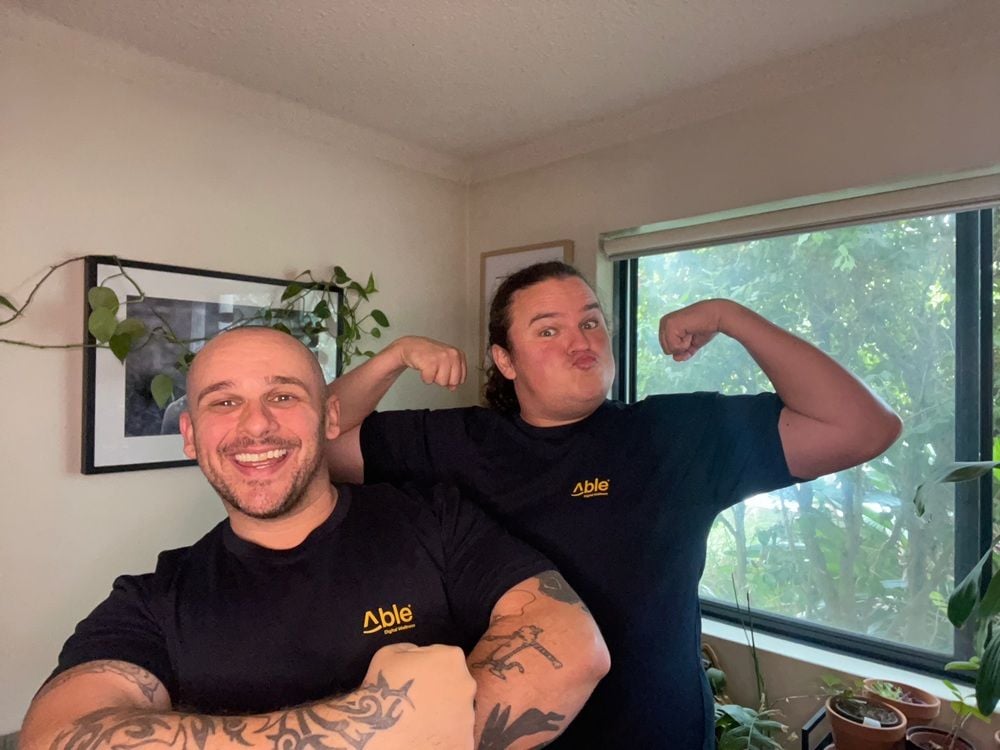
Chapman says the seed round is the first capital injection for Able Digital Wellness in the past five years – a development phase that has deliberately been as long as it needed to be.
“Although the disability market is quite large in Australia and globally, it is still a niche market and when you put a product like this out there you want to make sure it’s fit for purpose,” he says.
“It’s been a labour of love until now because we didn’t want to take any seed money early on as we wanted to make sure the product was right.
“We have now had product in the market since November last year, and we’ve also had different iterations in pilot with various companies to make sure we are serving the market we are trying to help.”
Through closed piloting over the past two years, Chapman says he has gathered sufficient feedback to ensure that the platform is co-designed with the end user in mind.
“We’ve had some great feedback from clients who have seen great success with their clients,” says Chapman.
“That was the turning point for us as to whether we raise money and scale up.”
Able Digital’s largest customer is Naruma, which supports 430 homes and 5,000 clients nationally.
“In an industry with a high churn rate, we can give service providers the resources that can improve the quality-of-life outcome for the individual client and also behavioural outcomes which means it improves the working environment for carers as well,” says Chapman.
Able Digital Wellness sees its biggest growth prospects in the B2C market in terms of its global expansion plans.
“Downs syndrome in NZ and the UK is exactly the same as Australia, so our platform is completely relevant to other English-speaking countries at the moment,” says Chapman.
“Our business was always built to be automated. We’re not an employee-heavy business and this funding will help us automate the platform more and create a better user experience.”
Guiding the startup’s path to growth is an advisory board that includes Griffith University’s Dr Dinesh Palipana, Queensland’s first quadriplegic medical intern, and The Hopkins Centre’s executive director Professor Elizabeth Kendall.
Recently joining the company’s as chief growth officer is Tommy Trout, founder of WeFlex, a personal training business for people with disabilities.
“We want the business to be successful and commercially viable, so we brought in people who understood what we were doing and had a real focus on making sure we are going to deliver change to disadvantaged populations,” says Chapman.
“We want to be 5000 active users on the platform over the next 12 to 18 months, then in 24 to 36 months we want to be knocking on the door to about 10,000 global users.
“We believe we now have a truly co-designed product with all the right team on board and the right roadmap and strategy for growth.”
)