)
After accelerating business growth since launching in the US two years ago, Perth-born fashion brand Alf the Label is among a raft of small Australian companies caught up in the tariff war that could cruel sales from its biggest market.
Founded by Sophie Doyle in 2016 a year after she fell pregnant with her first child, Alf has built on a loyal Australian following to grow 500 per cent year-on-year in the past 12 months with its US revenue now accounting for 70 per cent of total sales.
“With 70 per cent of our revenue coming from the US it is a significant impact for us, that’s for sure,” Doyle, the Alf CEO, tells Business News Australia.
Alf, which started out purely targeting the parenting market by producing baby bags, parent bags and pram caddies, has expanded its offering in the past two years to now include handbags and accessories which make up half of business turnover.
While Doyle designs all the products sold by Alf, they are manufactured in China – and that has left the company exposed to US President Donald Trump’s 125 per cent tariffs imposed on the country’s goods overnight, up from 104 per cent yesterday.
The rapidly changing tariff landscape is taking its toll on Alf as Doyle looks to pivot the business while trying to preserve the goodwill she has built with online customers in the US.
“It’s quite hard to get down to exactly what we are going to do until this stabilises,” says Doyle.
“I am hopeful that our two biggest trading partners for my business, China and the US, are going to come to some sort of agreement. Until then we just have to be agile and do what we can.”
Doyle says that at this stage she is still uncertain how much the tariffs will impact pricing of the company’s products in the US.
“It depends on how we absorb the tariffs through the supply chain,” she says.
“There are various parts of our pricing that can absorb little bits and pieces of the tariff, but it’s going to come down to working out whether it’s too big a number to absorb.
“In my opinion 125 per cent is too big a number to be able to absorb for a small business like ours. Less than that it might be a matter of adjusting the pricing, so we share the load.”
Doyle says the frustration is working out a pricing strategy with tariffs that change “every single day”.
“Yesterday we spent a number of hours on our pricing architecture based on a 104 per cent tariff and then I woke up this morning and it’s 125 per cent,” she says.
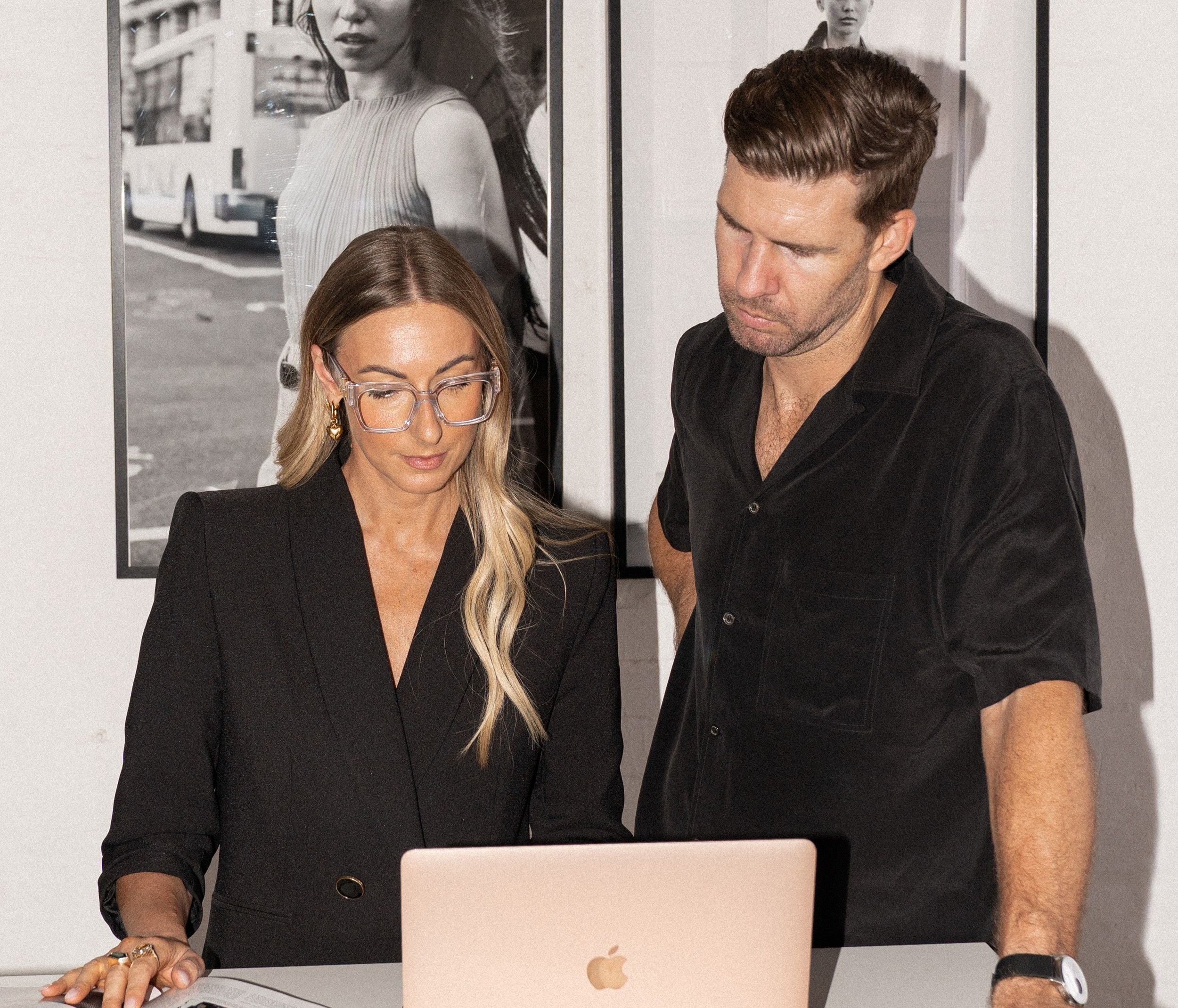
Alf, which is headquartered in Fremantle and has a warehouse in Sydney from where it ships goods nationally and offshore, has a staff of seven and is among countless small Australian businesses tackling the tariff uncertainty.
“It’s going to have an impact on our business and a lot of the businesses in my network,” says Doyle.
“I have a lot of close relationships with businesses in similar industries and they all produce in China. I spoke to one brand last night which has 85 per cent of their sales coming from the US.”
But Doyle, who runs the business with her husband Luke, is drawing on her self-described resilience as an entrepreneur to come up with a solution.
“I am going to find a way through this,” she says. “We survived COVID, so I feel we are no strangers to having to be creative.”
While it is business as usual at the moment for Alf, the timebomb is ticking for the business until 2 May 2025 when the US tariffs will apply to all sales made by the company. Until then, customers who buy products valued at less than US$800, which predominantly account for most of Alf’s shipments, are not subject to the tariffs.
Critical to Doyle’s plans are to shore up Alf’s existing Australian market and ensure that US customers are not hit with a surprise price hike after purchase.
“Essentially we want to make sure our customers in the US are well aware of what they are buying and if there are any additional tariffs showing at the checkout – that they are purchasing for the one price rather than getting a nasty bill from DHL or another postal provider post-purchase, because that’s when the consumer confidence will drop,” says Doyle.
A renewed focus on the Australian market is a key immediate priority for Alf amid the current global turmoil.
The brand already has a bricks-and-mortar retail presence domestically, with its products stocked by David Jones. The company’s non-parenting product sales also have grown 400 per cent in Australia over the past 12 months.
“Because the tariff situation is changing day by day, our plan is to continue servicing the Australian market where we began,” says Doyle.
“We have amazing customers here. But on the sidelines, it’s also about making sure we identify new markets to test such as Canada, the EU and Asia.”
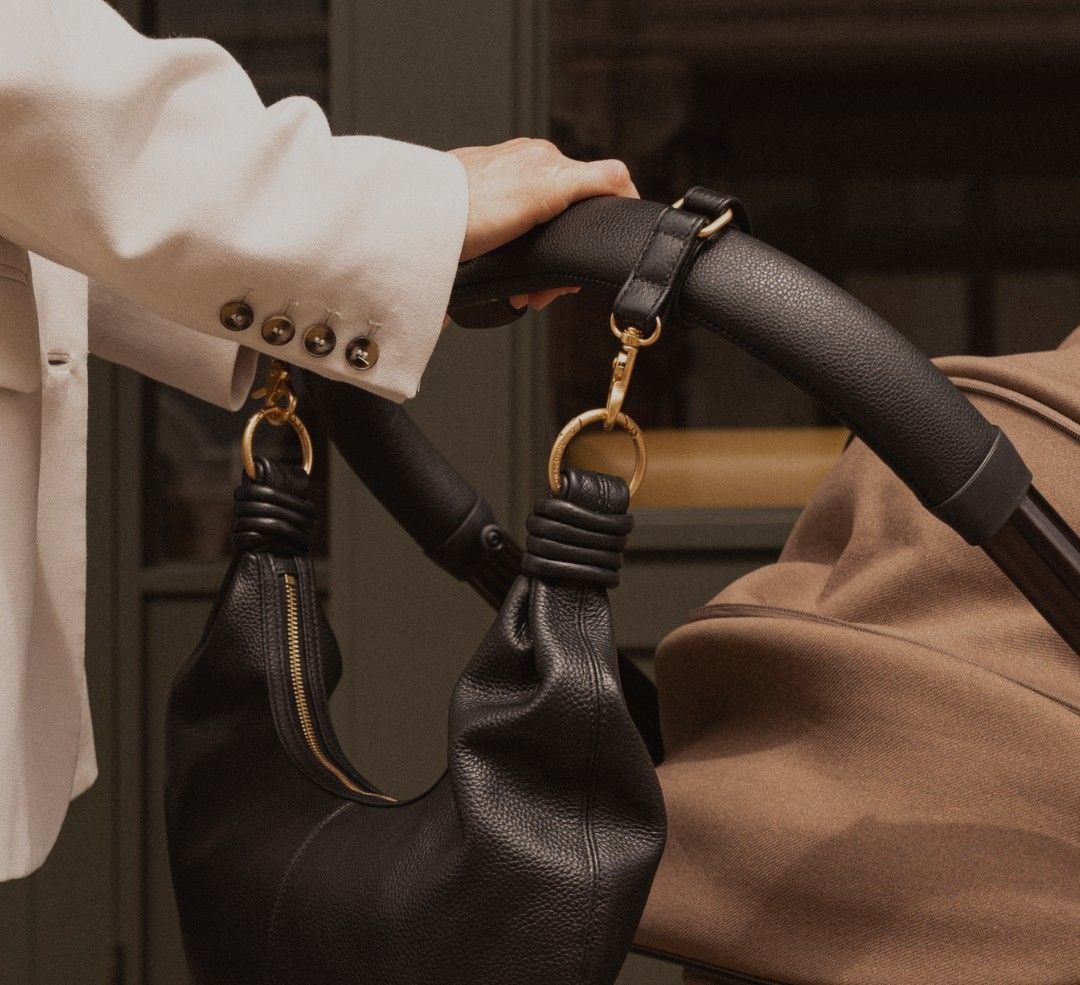
Doyle says when she started Alf in 2016 she always intended to scale in the US, bit it was largely an Australia-focused business for the first seven years.
“We started testing worldwide at that point and we found the most opportunity and the cheapest acquisition cost was to go direct-to-consumer in America,” she says.
The brand struck a chord at New York Fashion Week two years ago which Doyle describes as a “springboard” into the US.
“We scaled really aggressively and achieved 500 per cent year-on-year growth into the market since,” she says.
The tariff war hasn’t swayed Doyle from going back to New York Fashion Week again in September as the event helps build brand credibility beyond the US market.
“A lot of it is around being able to show our products on the international stage rather than just US, and if we are not actively selling into the US at that point it’s going to be a real shame,” she says.
“But between now and September, who knows what’s going to happen? Every day it seems to change.”
Doyle says her entry to the US market had been relatively easy with Alf building a loyal customer base rather quickly there.
“Our returning customer rate has increased considerably over the past 18 months or so and that’s down to the products we are producing. They like the quality of the product and the experience they are getting from us.”
But geographic diversification beyond the US might prove more challenging, particularly the EU.
“We do have customers in the EU actively purchasing but it’s about making sure our pricing works over there from a volume perspective,” says Doyle.
“The EU does also have tariffs. Britain has a 21 per cent VAT for instance, so it’s about trying to navigate those sorts of things and making sure we can still be profitable if we are going to move into those markets.
“There are ways of doing that through local distribution, but you just can’t turn that on overnight and the amount of risk that is associated with sending bulk goods into a new market is considerable. So, we need to test and take it slowly.”
Doyle has also toyed with the idea of shifting production to another country or even into the US where she has spoken with a manufacturer.
“We’re obviously looking at every option,” she says.
“It would not be easy or ideal to move our supply chain somewhere else. There’s also the throughput.
“The factory I know of in the US is only able to produce in small volume so it’s not really a scalable option.
“A lot of the raw materials would also come from outside of the US anyway. They might have local tanneries for the leather but things like the hardware are all produced outside the country.”
Doyle notes that over the past nine years, Alf has thrived through strong relationships with its suppliers in China.
“We are so happy with the product that they produce. Many of the world’s luxury brands are made in China because their craftsmanship and workmanship are incredible.”
With scores of options being considered, Doyle remains confident that Alf can work its way through the current crisis.
“It will take a lot for me to lay down and say I am defeated,” she says.
“We are going to make changes to our business to be able to pivot around not having our largest market, but we also have to wait until the situation stabilises before we can get a really accurate plan in place.”
- Update, 11 April: Since this story was published, US President Donald Trump has announced a further increase in tariffs on Chinese goods to 145 per cent.
)